
Ice In Ponded Water
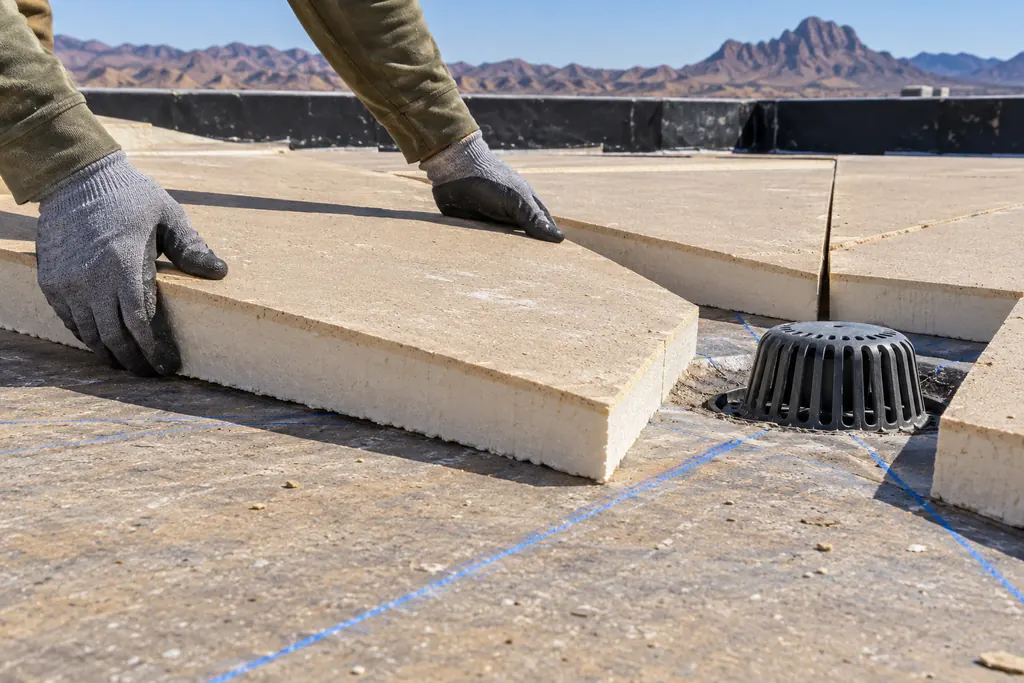
Water left in low spots freezes on winter nights. Ice expands against nearby laps and flashing, and the same spot leaks once it thaws the next afternoon.
Valle Vista, AZ
As a Valle Vista commercial roofing contractor, we time membrane and metal roof work around freezing nights, afternoon wind, and the summer monsoon so materials go down right.
Valle Vista sits northeast of Kingman along Historic Route 66. Kingman's 1991 to 2020 normals show about 62 nights a year at or below freezing and 97 days at 90°F or hotter, so roof materials face both extremes.
Adhesives, primers, and seam tape all have temperature limits. We pick work days and hours so each product goes down inside its range.
Most roof trouble here starts with temperature, wind, or a sudden storm.
Water left in low spots freezes on winter nights. Ice expands against nearby laps and flashing, and the same spot leaks once it thaws the next afternoon.
Rubber laps taped or glued below the product's minimum temperature never grip fully. Those seams look fine for a season, then open during the first hot spell.
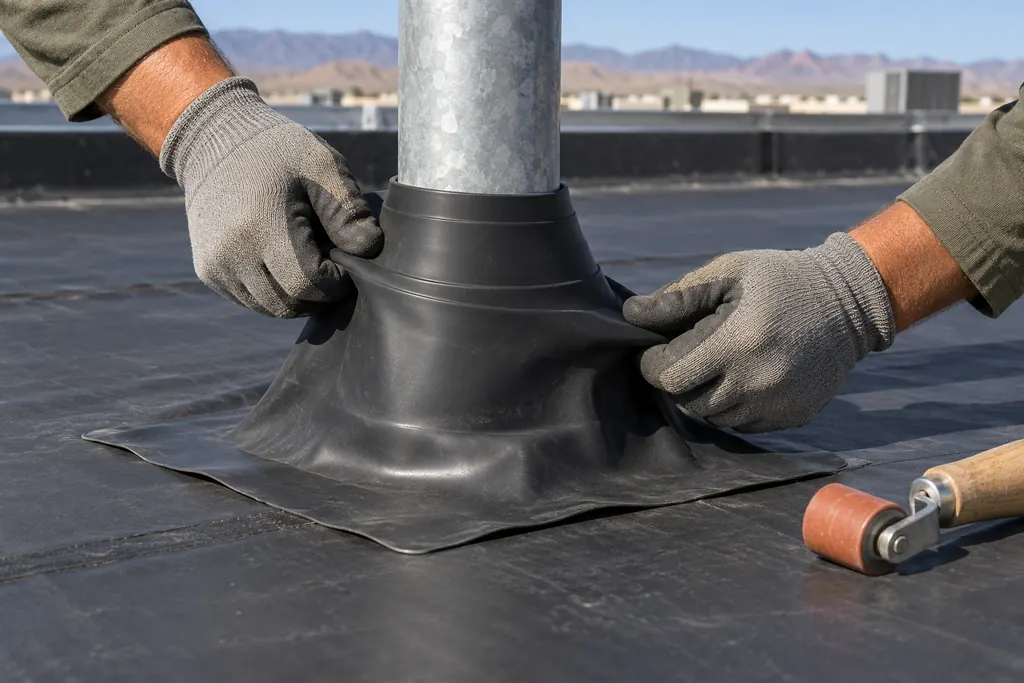
Summer roof surfaces run far hotter than the air. Sealants at curbs and pitch pans dry out and crack, and dark membranes age fastest.
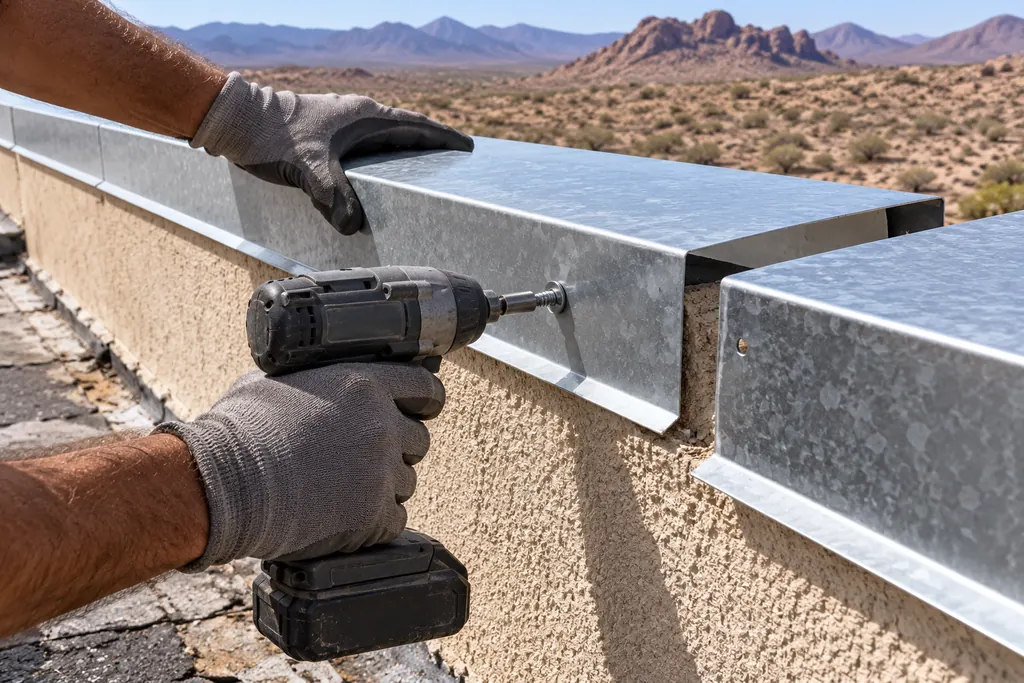
Afternoon gusts work at loose edge metal and lifted membrane corners. Each windy day tears a little more until rain finds the opening.
Sudden summer downpours test drains and scuppers all at once. Clogged outlets back water up over flashing heights that stay dry in ordinary rain.
A leak that shows only in winter, or only after storms, points to a weather cause. Matching the ceiling stain to the season narrows the search on the roof.
Each fix below includes the weather window it needs.
Seams split near ponded spots.
What the new work does
Tapered insulation or crickets remove the low spots, and damaged seams are replaced in mild weather.
Laps that never gripped.
What the new work does
Laps are redone on warm afternoons inside the primer and tape temperature range.
Cracked sealant at curbs and pitch pans.
What the new work does
Pitch pans are replaced with pre-formed boots or curbs, and new sealant goes on in moderate heat.
Membrane peeling at the perimeter.
What the new work does
Corners and edges get added fastening or adhesive, then new edge metal, on calm days.
Water topping flashing during monsoon bursts.
What the new work does
Drains and scuppers are cleared and checked, and overflow scuppers are added where a parapet traps water.
Two membranes cover most Valle Vista commercial roofs, each with its own weather limits.
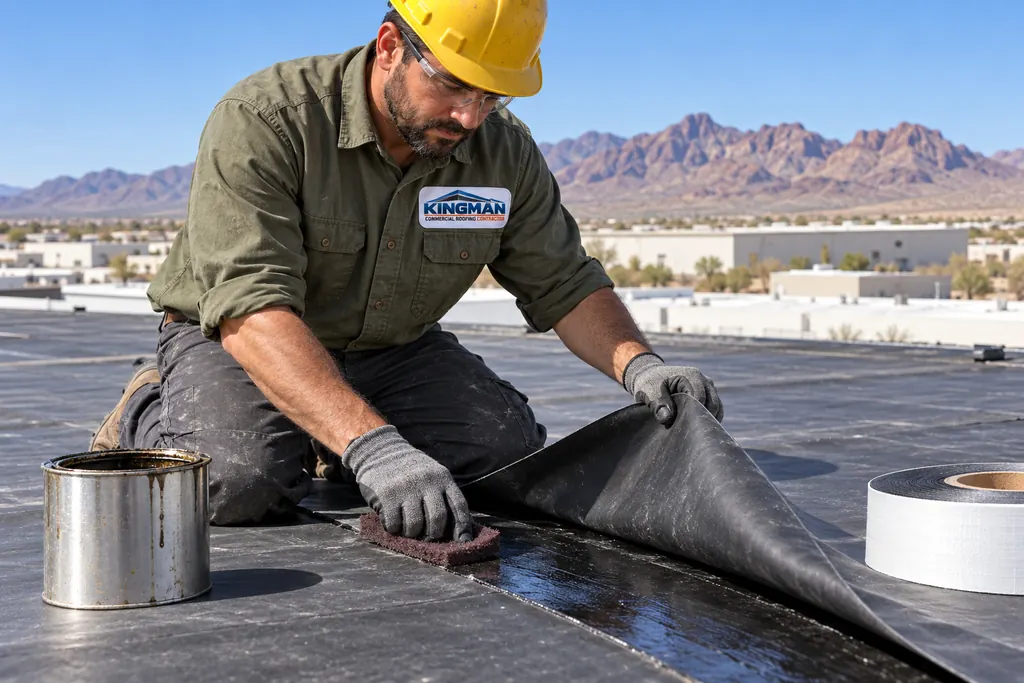
EPDM stays flexible through freezing nights, which suits buildings that see cold mornings. Its seam tape needs a warm deck to grip.
EPDM roofing and its cold-weather limits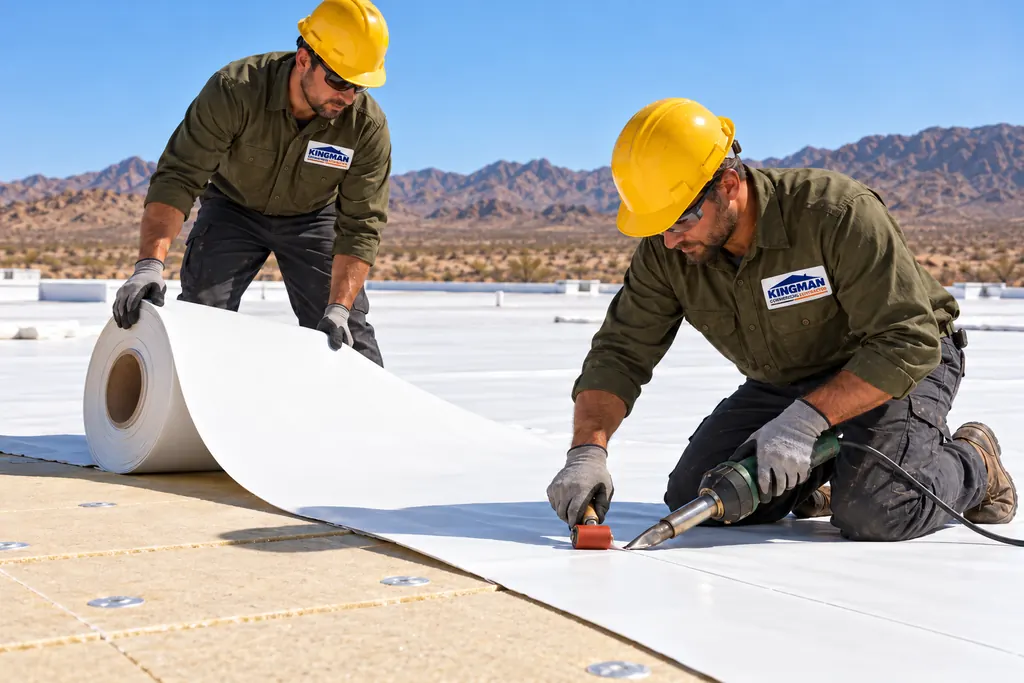
TPO laps are welded with heat instead of glue, so cool mornings matter less. Afternoon wind is its main scheduling limit.
TPO roofing with welded lapsTell us which season the stain appears and after what kind of weather. That points to a frozen pond, a cold-set seam, or a summer storm.
What To Have Ready
The forecast shapes each work day as much as the roof does.
We walk the roof and match each leak to the weather that triggers it. Ponded spots, cold-set seams, and storm overflow each need a different fix.
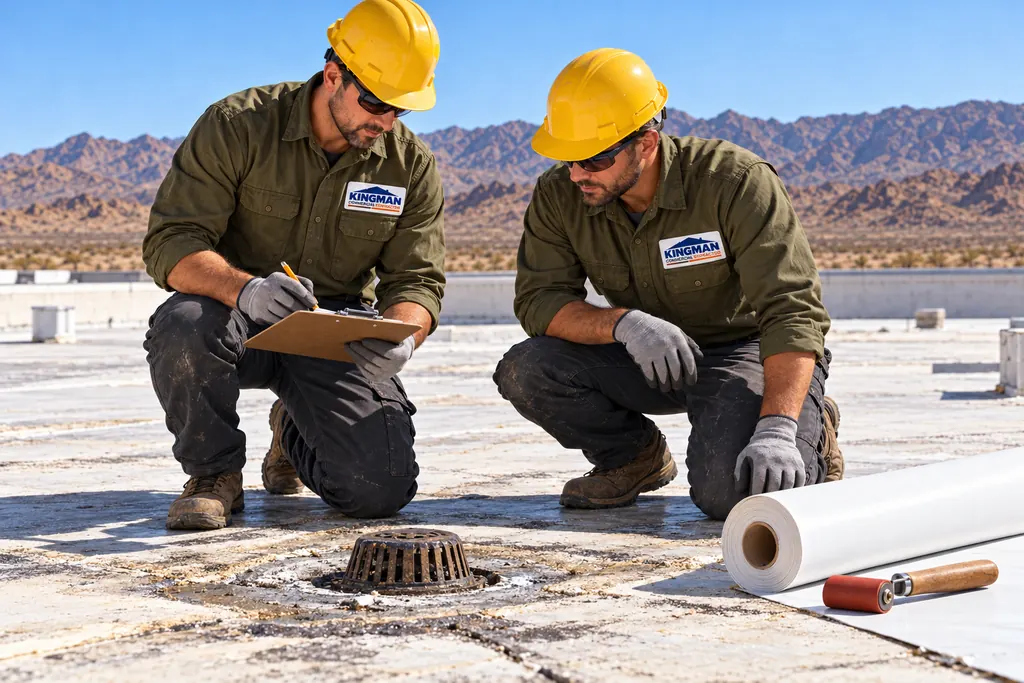
Big tear-offs land in spring or fall, when nights are milder and storms are rare. Smaller roof repairs fit into any calm, dry stretch.
Crews read the deck temperature before opening any adhesive. In winter, taped and glued steps start late morning and stop early enough to set.
Every roof section is closed before the crew leaves, and monsoon afternoons get an earlier stop. Temporary seals protect any edge left open overnight.
A follow-up look after the first real storm checks drains, scuppers, and new laps under load. That visit catches anything the dry walk missed.
Valle Vista sits northeast of Kingman on Route 66. These areas are nearby.
Weather, materials, and permit answers for Valle Vista buildings.
Intense sun, wide temperature swings, wind, and short heavy storms are the main stresses. UV and heat age membranes and sealants, day-to-night swings work metal panels and seams, wind lifts loose edges, and freezing nights turn ponded water into ice. Monsoon season, June 15 through September 30, tests drains and scuppers.
Spring and fall are the easiest. Nights are milder for adhesives, afternoons are cooler for crews, and storms come less often than in monsoon season. Summer work still happens, starting at first light.
EPDM stays pliable when temperatures drop below freezing, so it tolerates movement on cold nights well. TPO handles cold too, and its welded seams avoid the cold-weather limits of tape and glue. The choice usually comes down to the building's use and cooling.
Yes, within their temperature limits. Each primer, tape, and adhesive lists a minimum, so winter work waits for the deck to warm and stops before evening. Welded TPO seams have fewer cold-weather limits than taped seams.
Over cooled space, yes. Valle Vista sees long hot summers, and a white TPO or white-on-black EPDM surface reflects much of that sun. Over unheated storage the benefit is smaller, and the roof choice can focus on durability instead.
Clear drains and scuppers first, then look for lifted edges, loose coping, and water standing longer than a day. Inside, check ceilings under drains and rooftop units. Photograph anything you find before it dries.
Mohave County Development Services, since Valle Vista is in unincorporated Mohave County. The job's scope decides whether a permit is needed, and we confirm the requirement for each project.
Only as a temporary measure. Wet surfaces keep primers, tape, and welds from holding, so a rain-day fix is a cover or emergency seal. The real repair waits for a dry deck.
Tell us when the leak shows and what the weather was doing. We inspect, then schedule the work for the right conditions.
Want A Call About Your Roof?
Leave a name and number and we will call you back about the building.
Or call now: (928) 436-4835