Chalky, Heat-Aged Membrane
Years of high-desert sun dry out membranes, sealants, and old patches. The surface turns chalky or brittle, and cracks open first at corners, curbs, and drains where the sheet flexes most.
Kingman, Arizona
As a Kingman commercial roofing contractor, we install, replace, and repair TPO, EPDM, industrial, and metal roofs, and every job starts with a roof inspection.
Most calls start with one of these six conditions, and each one points to a different repair.
Years of high-desert sun dry out membranes, sealants, and old patches. The surface turns chalky or brittle, and cracks open first at corners, curbs, and drains where the sheet flexes most.
Gusts get under loose coping and edge metal, then peel the membrane back from the perimeter. One lifted corner lets wind-driven rain run under the sheet and across the deck.
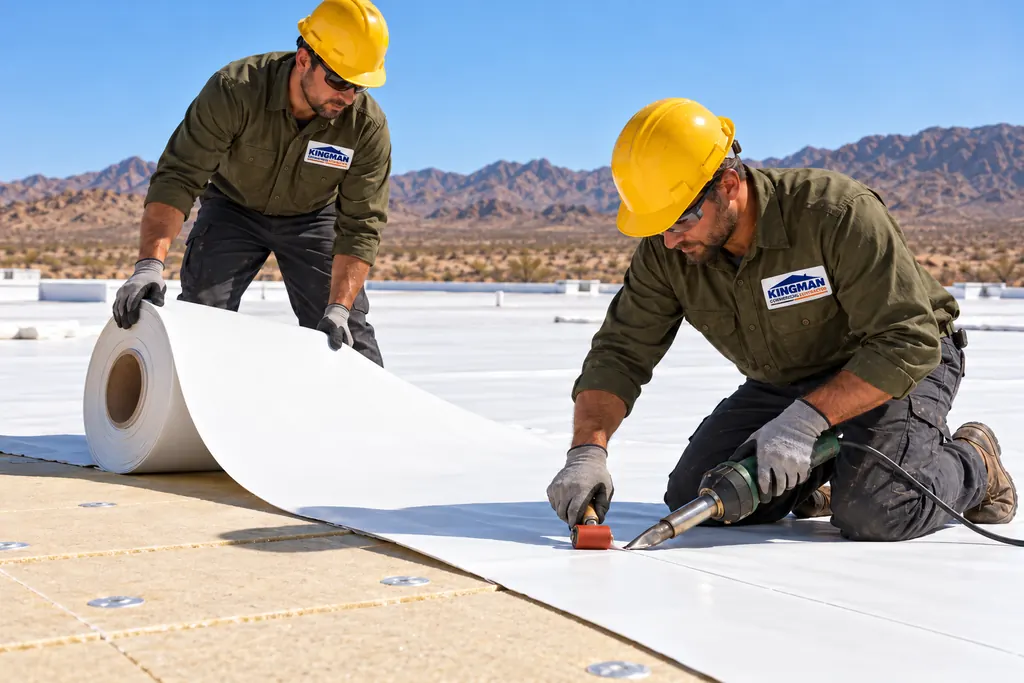
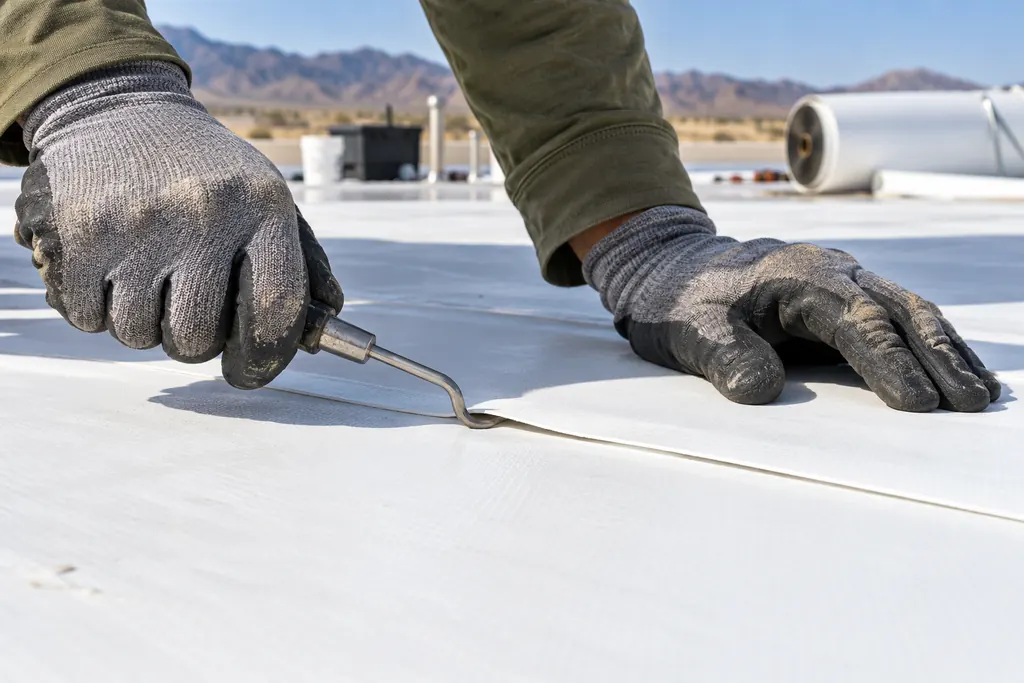
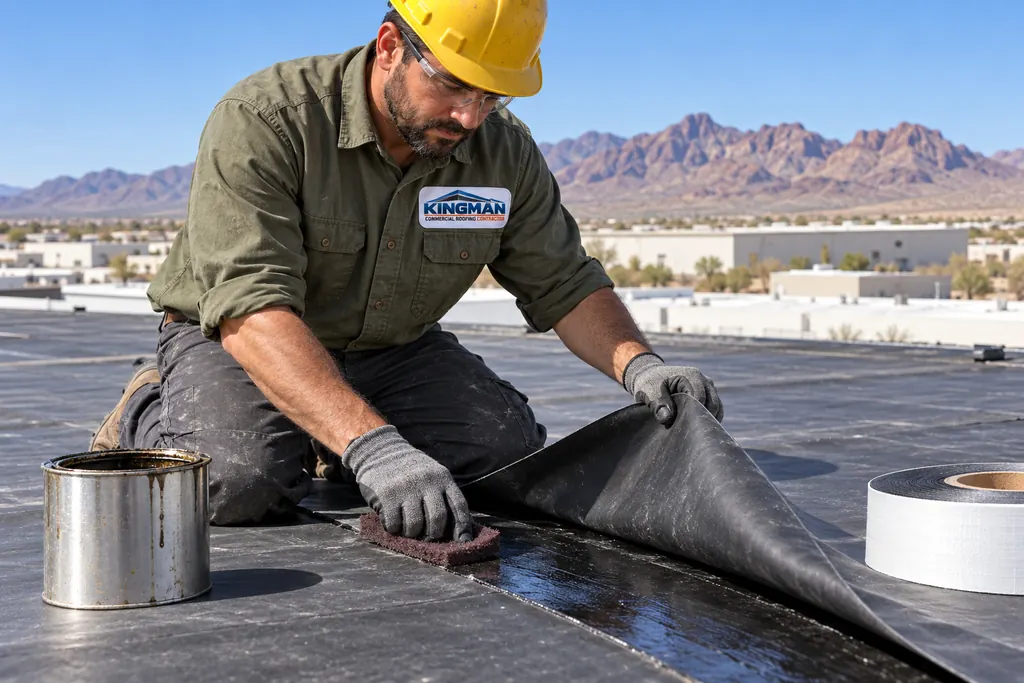
Daily heat swings work at every lap. On TPO a weak weld lets go; on EPDM the tape or adhesive releases, often where dust settled on the seam during an old repair.
Windblown sand and trash pack into drains and scuppers. Water then sits on the roof after a monsoon storm, and a freezing night turns that pond into ice that stresses nearby seams.
Exposed-fastener metal roofs rely on rubber washers that age in UV. As panels expand and contract, screws back out and washers crack, leaving pinholes along every purlin line.
A stain on a ceiling tile seldom sits right under the leak. Water travels along the deck or a purlin first, so we trace it from the roof down before cutting anything open.
Each system is drawn on the kind of Kingman building it fits best, from a cooled storefront to a steel shop.
 TPO
White TPO fits low-slope roofs over cooled retail and office space. Its laps are fused with hot air, so wind and daily heat swings work against a welded joint instead of glue.
Best For
Look Elsewhere
 EPDM
Rubber EPDM stays pliable on freezing nights and patches simply. That helps older buildings that move, or roofs pierced by many pipes, vents, and curbs.
Best For
Look Elsewhere
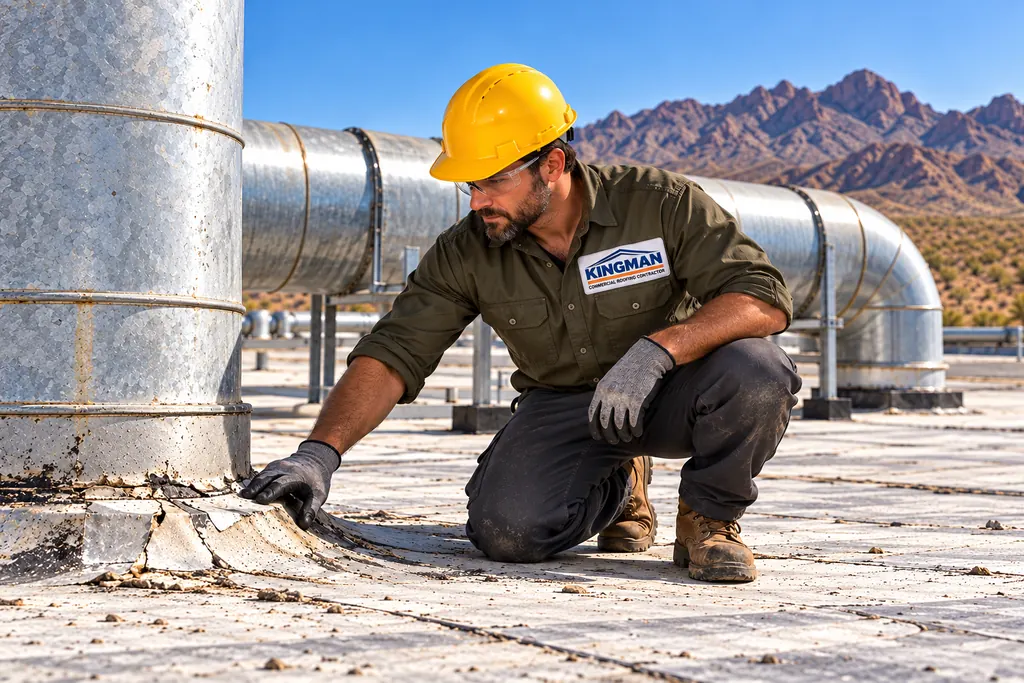 Industrial
Plant and distribution roofs carry exhaust fans, ducting, and skylights. The membrane matters, yet the flashing at each penetration decides whether heat, vibration, and fumes open a leak.
Best For
Look Elsewhere
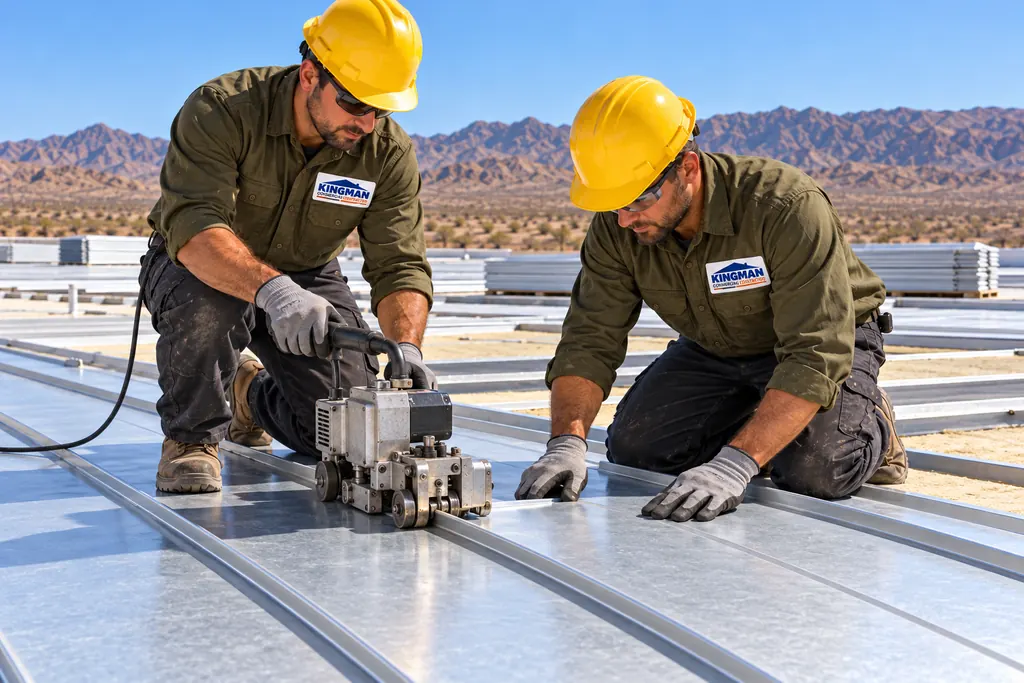 Metal
Standing-seam panels ride on clips that let the steel grow and shrink through Kingman's day-to-night swings. Exposed-fastener panels cost less up front and need washer checks.
Best For
Look Elsewhere
Tell us which side of the building took the gust and whether water reached a ceiling. That narrows the repair before anyone climbs up.
What To Have Ready
Every job starts with a walk on the roof and a core cut. Pricing comes after we know what sits under the membrane.
We walk the whole roof, then check the ceilings below. Seams, flashing, drains, and edge metal get photographed so the findings can be explained to you plainly.
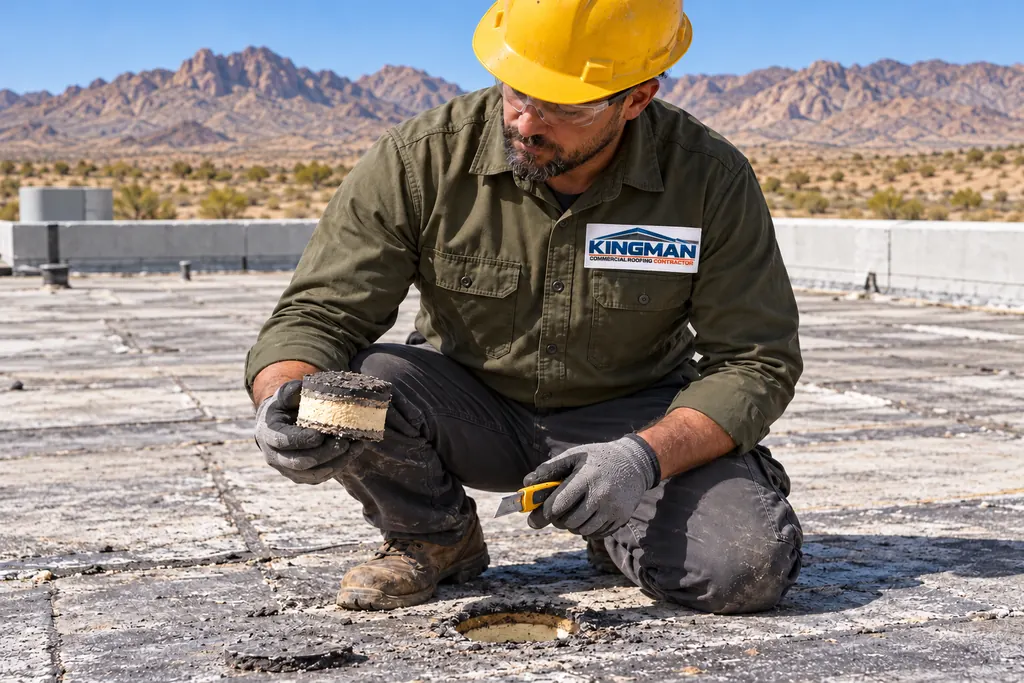
A small core shows every layer from membrane to deck. Wet insulation changes the job, so this answer comes before anyone suggests a repair or a new roof.
Repair, recover, or tear-off gets written down by roof area. Inside city limits the City of Kingman issues permits; out in the county, Mohave County Development Services does.
Crews open only as much roof as they can dry in before quitting time. Summer work starts at first light to stay ahead of the hottest roof hours.
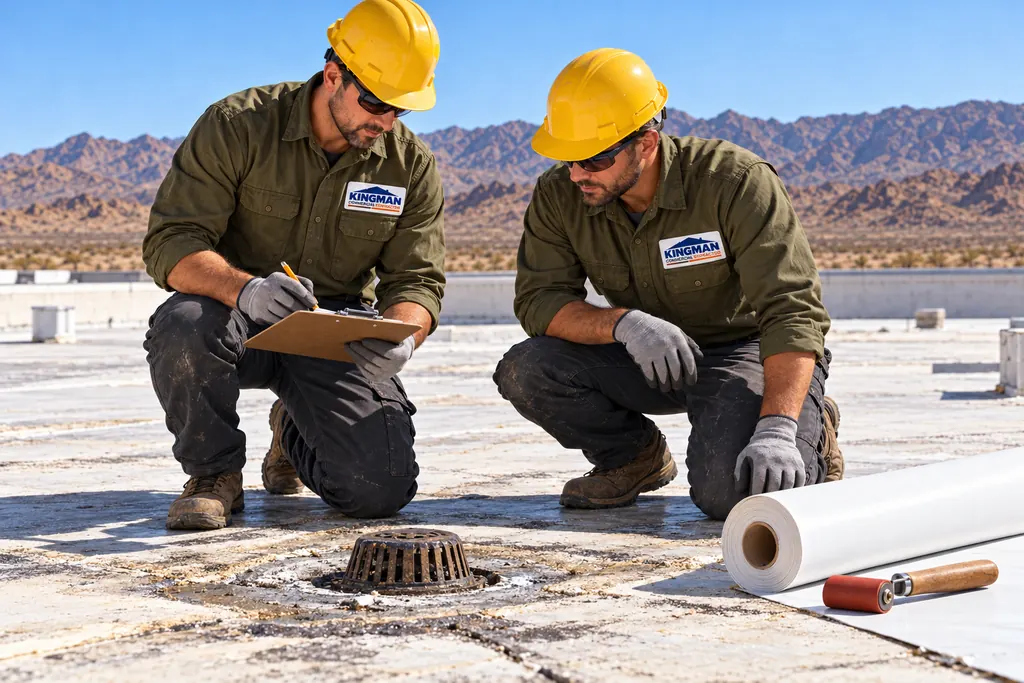
Every weld gets probed and every lap checked by hand. Drains are cleared of debris, and the last walk covers what to watch between inspections.
The roof decides the job. These signs point toward each path, and a core cut confirms which one fits.
Each failure below has a matching fix built into the new assembly.
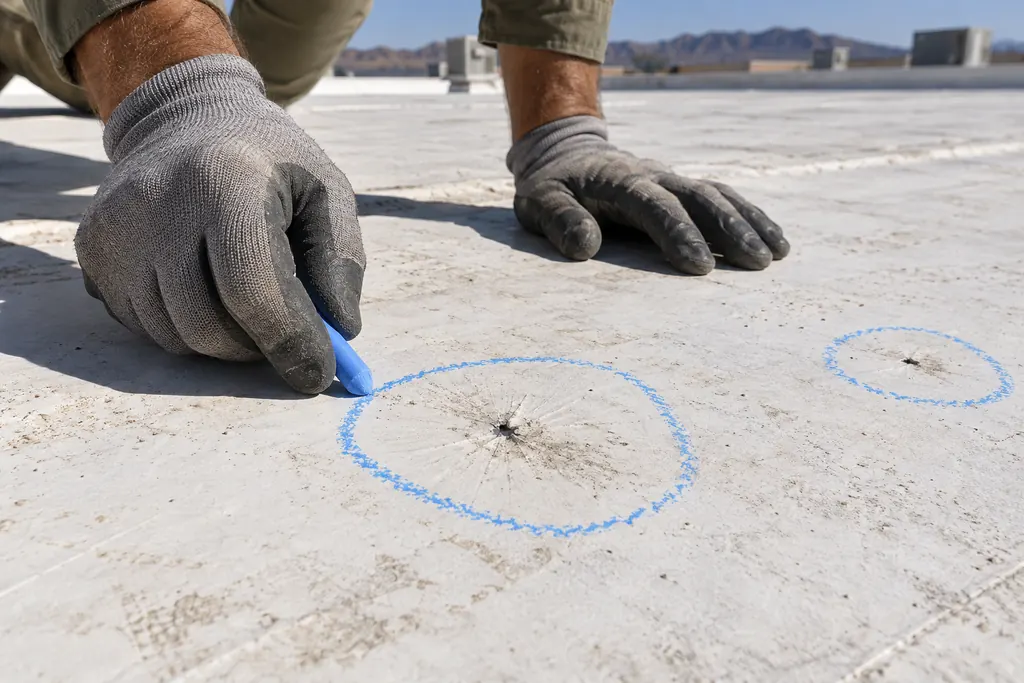
Chalky, brittle membrane that cracks when it flexes.
What the new work does
A new white TPO or white-on-black EPDM sheet reflects more summer sun and starts its service life over.
Edge metal and coping working loose in gusts.
What the new work does
Perimeter attachment matched to wind exposure, with new coping and edge metal fastened through to the structure.
Puddles that sit for days after a storm.
What the new work does
Tapered insulation slopes the deck toward the drains, and drains and scuppers are cleared and checked during the work.
Seams releasing at corners and along the edges.
What the new work does
TPO laps are heat-welded and probed. EPDM laps are primed and taped on a clean, dust-free sheet.
Pinholes at aged washers along metal panels.
What the new work does
Standing-seam panels on concealed clips take exposed screws off the weather side of the roof.
We cover Kingman and six nearby places. Each sits on one of three roads out of town, and each has its own building mix.
Interstate 40 runs south from Kingman toward the industrial park and Yucca.
US 93 heads northwest; SR 68 branches west toward Golden Valley.
Historic Route 66 runs northeast; Butler sits just north of the city.
Short answers on systems, cost, and the work. Permits, taxes, and utilities are covered on the Kingman roofing FAQ.
We install, repair, and replace roofs on commercial and industrial buildings. Most Kingman work involves low-slope TPO and EPDM roofs and metal shops. A job can be one failed flashing, a recover over a dry roof, or a full tear-off with new insulation. All four systems are compared on the commercial roofing services overview.
Metal usually does. Typical ranges put metal roofs at 40 years or more, EPDM at about 25 to 30 years, and TPO at about 20 to 30. Kingman sun and temperature swings push an unmaintained roof toward the short end, so drain clearing and seam checks matter as much as the product.
Roof size, the number of layers coming off, and how much insulation is wet drive most of the cost. Penetrations add labor because each curb, pipe, and drain needs its own flashing. Access counts too: a crane lift over a loading dock costs more than rolls carried up a ladder at the back wall.
Often, because the old roof stays in place and less material goes to the landfill. A recover works only over one existing layer with dry insulation and a solid deck, and the building code limits how many layers a roof can carry. A core cut tells us which way your roof goes.
It comes down to roof size, the number of penetrations, and weather. A one-layer shop roof moves faster than a plant roof with exhaust curbs and skylights. We set the schedule after the inspection and work in sections, so each part of the roof is dried in before the crew leaves.
Usually for a short walk. Ceiling stains, rusted deck, and wet insulation are easier to trace from below, so we ask to see the rooms under any leak. During the work itself, crews reach the roof from a ladder point, a hatch, or a lift at the building edge.
Yes, with an early start. Crews begin at first light and save the hottest hours for staging, ground work, and cleanup. Adhesives and seam tape also have limits on the cold end, which matters on winter mornings after one of the roughly 62 freezing nights Kingman sees in a year.
Call or start an estimate. We inspect the roof, cut a core, and tell you whether repair, a recover, or a new roof fits the building.
Want A Call About Your Roof?
Leave a name and number and we will call you back about the building.
Or call now: (928) 436-4835