Released Seam Tape
Dust on the sheet during an earlier repair keeps tape from gripping. The lap edge lifts a little each hot afternoon until water wicks under it in a storm.
EPDM Roofing
As an EPDM roofing contractor in Kingman, we install, repair, and tie in black and white-on-black rubber roofs on older and equipment-heavy commercial buildings.
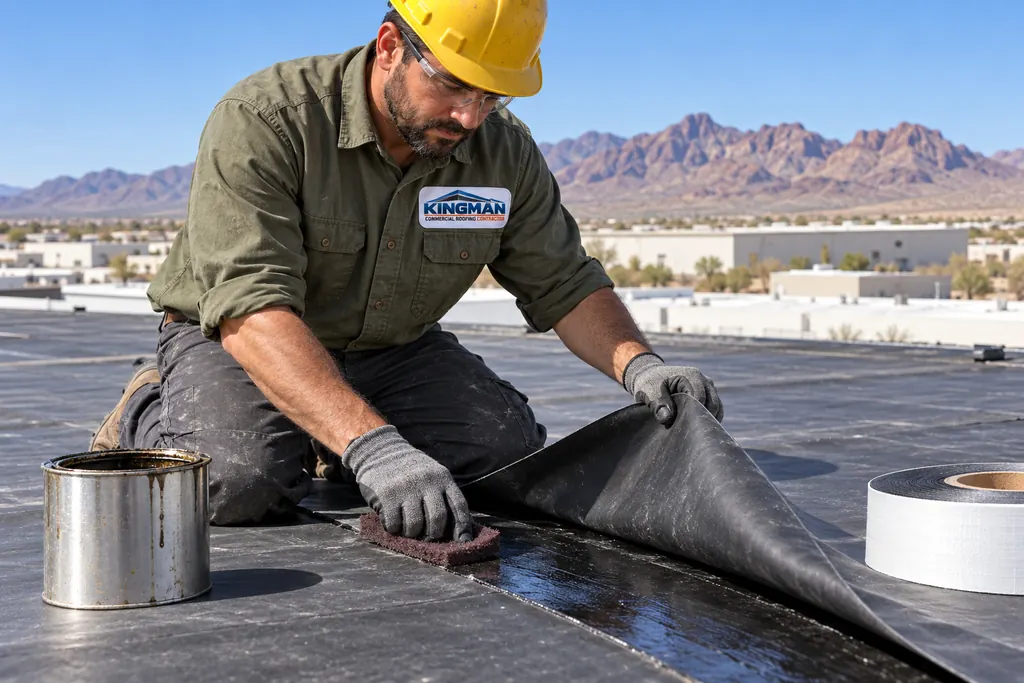
Rubber membrane earns its place on certain buildings and loses out on others.
These conditions show up on rubber roofs around Kingman after years of sun and cold nights.
Dust on the sheet during an earlier repair keeps tape from gripping. The lap edge lifts a little each hot afternoon until water wicks under it in a storm.
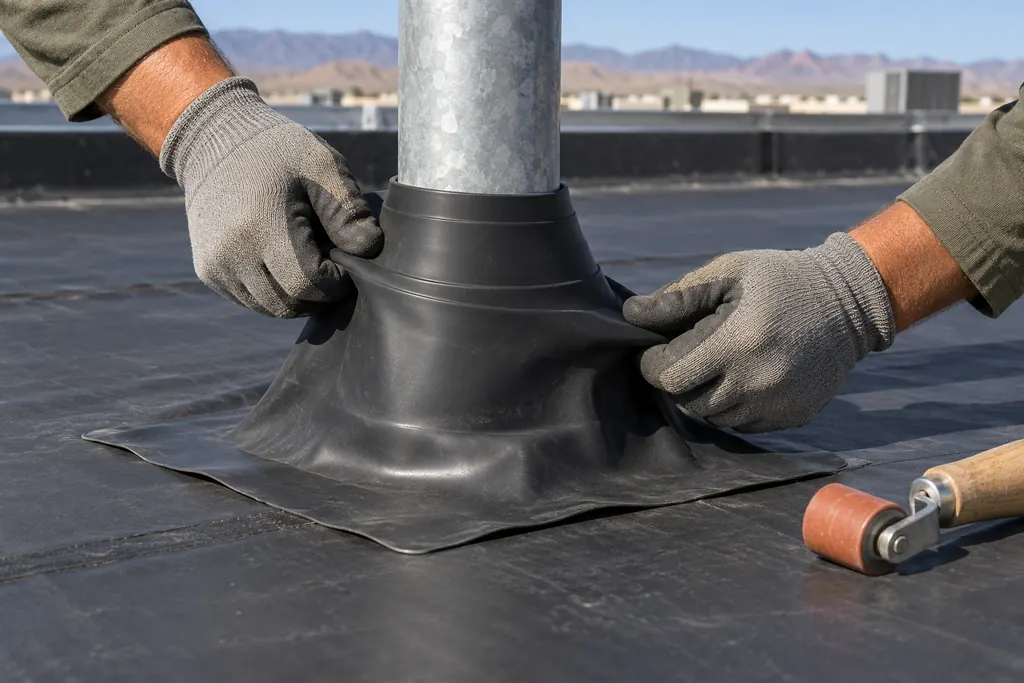
Molded boots around vent pipes dry out in UV. A split collar lets rain run straight down the pipe and into the ceiling grid of the room underneath.
Older EPDM shrinks over time and pulls at walls and curbs. The tension tents flashing away from the corner, a condition roofers call bridging, and it tears at the weakest seam.
Water under a loose rubber sheet travels across the deck before it drips. The ceiling stain can sit several bays away from the actual opening on the roof.
Standard black EPDM soaks up summer sun. Over an air-conditioned space, that heat passes through the roof deck as higher cooling loads and a hotter top floor.
Metal bars hold the sheet edge against parapet walls. When their fasteners loosen or the sealant behind the bar dries, water gets behind the wall flashing.
Four ways we handle a rubber roof, chosen after we sample the old sheet.
| Option | When It Fits | What Happens |
|---|---|---|
| Patch or re-tape a seam | Dry insulation, sheet still flexible | Clean and prime the old rubber, then apply new seam tape or a cover strip |
| Replace boots and terminations | Leaks at pipes, curbs, and wall edges | New molded boots, new termination bars, fresh sealant behind each bar |
| Recover with new EPDM | One dry existing layer and a solid deck | Insulation or cover board, then a new rubber sheet, adhered or ballasted |
| Tear-off and replace | Saturated insulation or brittle, shrinking sheet | Strip to the deck, new insulation, black or white-on-black EPDM |
Each fix below targets one of the rubber-roof failures we see most.
Seam edges peeling where tape lost its grip.
What the new work does
Laps are scrubbed, primed, and taped on clean sheet, then rolled so the tape contacts both plies fully.
Black roof adding heat to cooled rooms below.
What the new work does
White-on-black EPDM or added insulation cuts the heat that reaches the ceiling.
Split collars at vent pipes.
What the new work does
New molded boots are fitted and clamped, with a flashing collar taped to the field sheet.
Shrunk sheet pulling away at walls.
What the new work does
New sheet relaxes before it is adhered and is fastened at the base of walls before flashing goes up.
Loose bars and dried sealant at parapets.
What the new work does
Termination bars are refastened or replaced, and coping caps go back on with new cleats.
Count the pipes, vents, and curbs on the roof if you can. Penetrations drive most EPDM repairs, and the count shapes the estimate.
What To Have Ready
Rubber roofing rewards slow, clean prep, and the steps below follow that order.
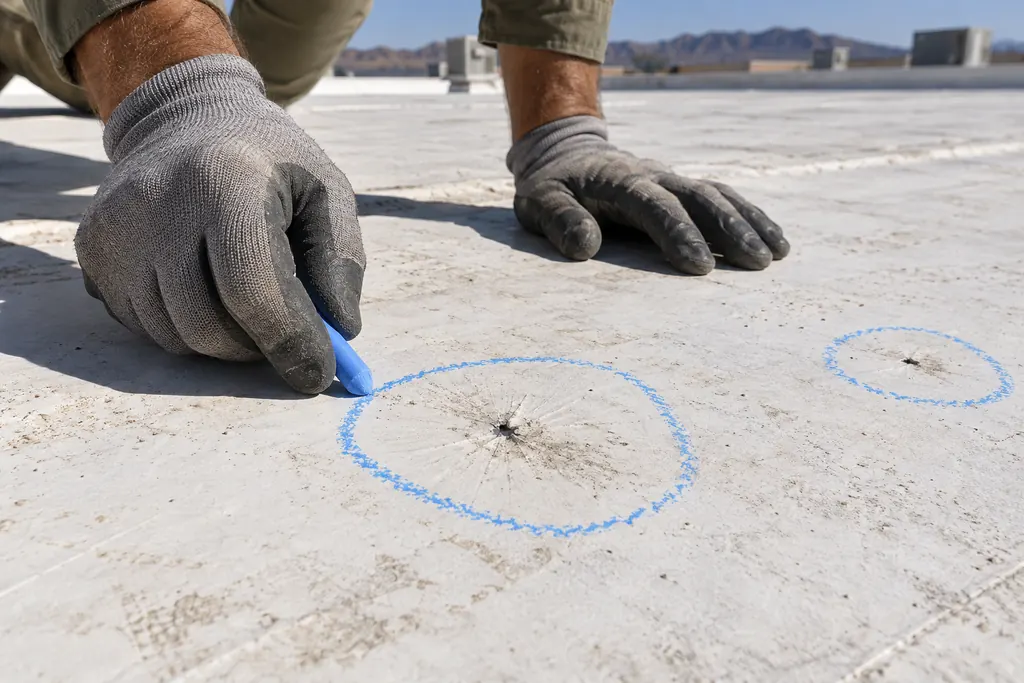
Every lap edge and boot gets a close look, and termination bars are tested by hand. Inside, we follow stains back toward the deck to find where water enters.
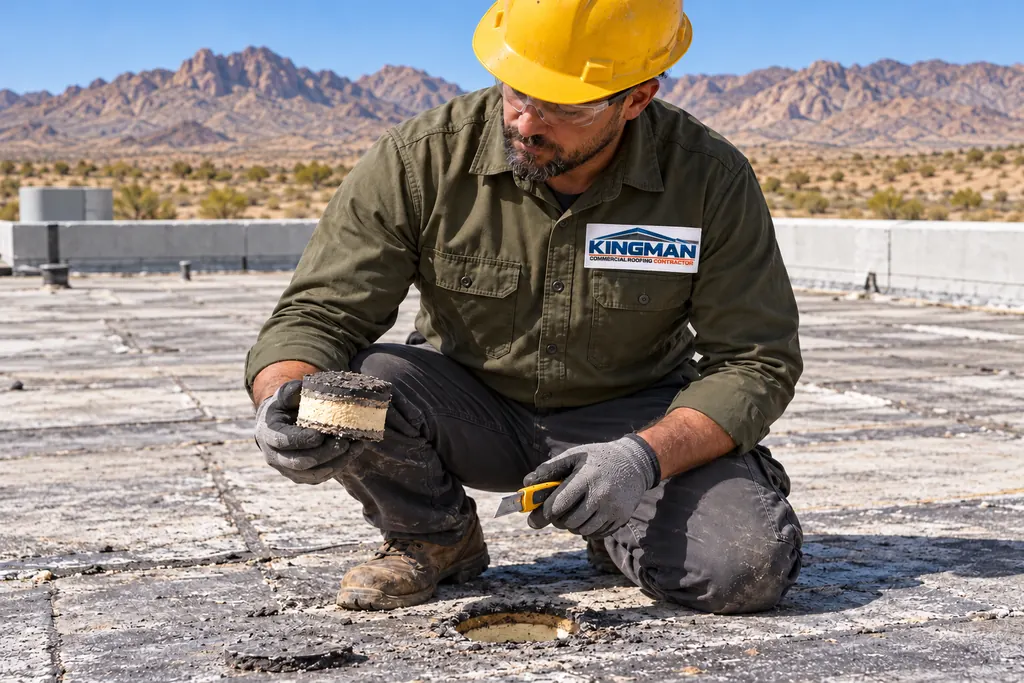
A small sample shows whether the existing sheet still flexes and takes primer. Supple rubber can be patched or tied into; brittle rubber comes off.
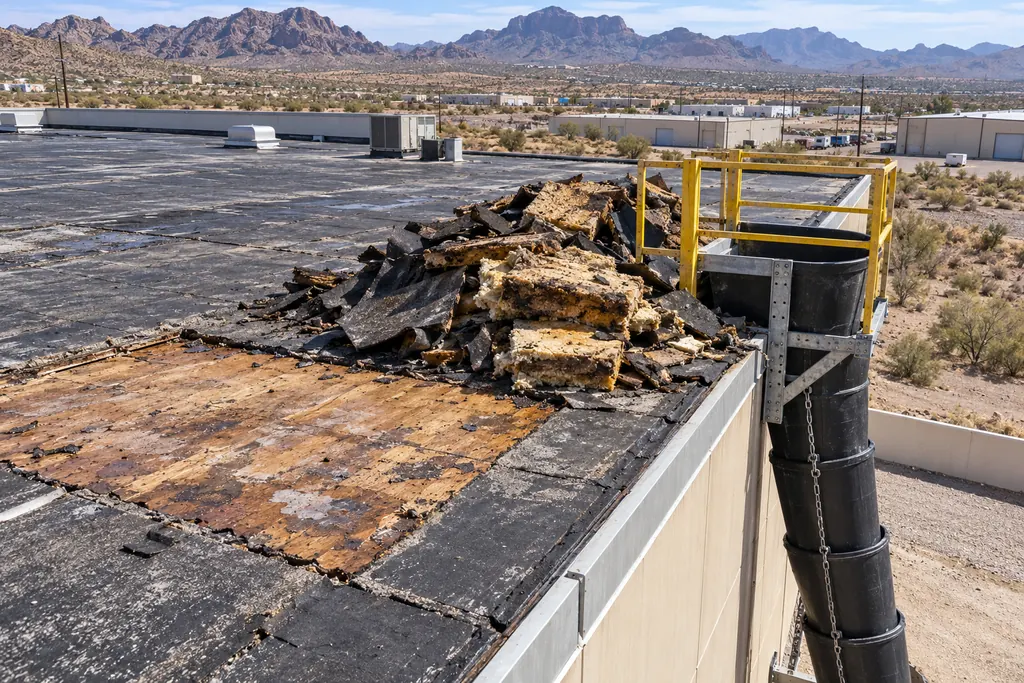
Large rubber panels are unrolled and left to relax before adhering. That pause keeps wrinkles and stress out of the corners on hot or cold mornings.
Seams are scrubbed free of dust, primed, and covered with seam tape. Rolling the tape presses it into the primer along the full width of the lap.
Pipes get molded boots, walls get termination bars, and curbs get flashing. The last walk tugs every lap edge and checks each boot clamp.
These two systems are the usual alternatives to rubber on Kingman buildings.
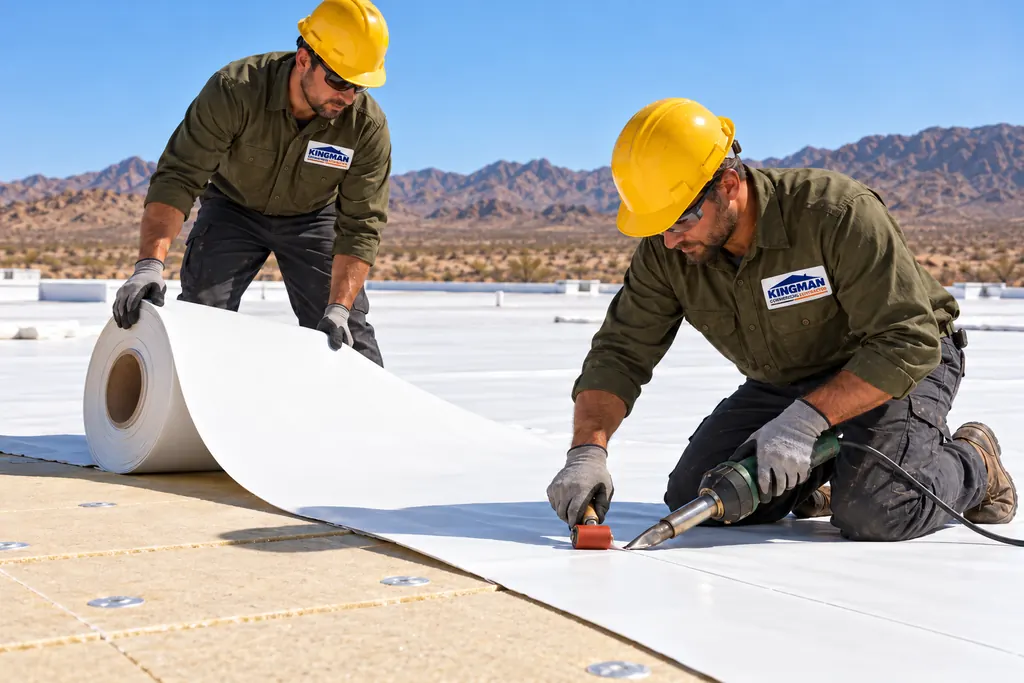
Pick TPO instead when the building is air-conditioned and the roof is fairly open, since white welded sheet reflects summer sun.
TPO roofing in Kingman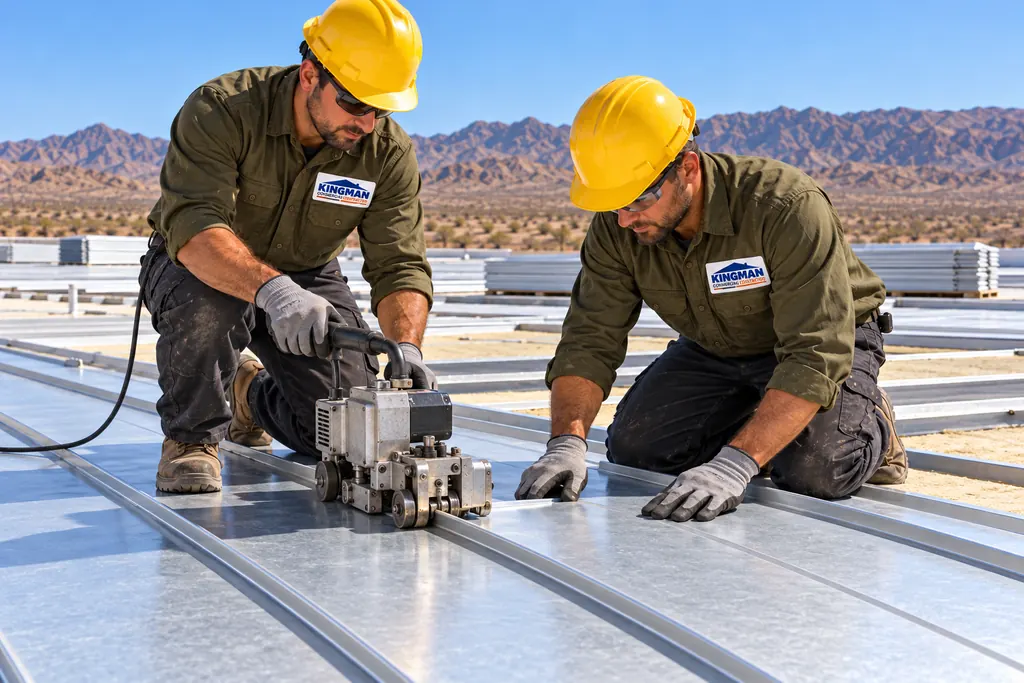
Shops and storage buildings with a pitch often do better with standing-seam metal than with any flat membrane.
commercial metal roofs in KingmanWhat owners ask most about rubber roofs on Kingman buildings.
On older buildings that move, roofs with irregular layouts, and decks crowded with penetrations. EPDM is a synthetic rubber that stays flexible through Kingman's freezing nights and patches simply. On an unconditioned warehouse its black surface matters less; over cooled space, we look at white-on-black sheet or extra insulation.
Over air-conditioned space, often yes. The white top layer reflects sun that standard black rubber absorbs, while keeping EPDM's flexibility and repair methods. On storage buildings with no cooling, plain black sheet usually makes more sense for the money.
Yes, if the rubber still flexes and the insulation is dry. A sample tells us whether primer and tape will grip. Brittle, shrinking sheet or wet boards across large areas push the roof toward a recover or tear-off.
Penetrations, wall flashing, and wet insulation add the most. Each pipe needs a boot, each wall needs a termination bar and flashing, and every wet board has to come out. Ballasted roofs also need their stone moved off and set back.
It slows the adhesive steps. Primers and seam tape have minimum application temperatures, and Kingman sees about 62 nights a year at or below freezing. Winter work starts after the deck warms and wraps up early enough for adhesives to set.
Loose rubber lets water travel across the deck before it finds a gap in the deck or a fastener hole. A stain can appear several bays away from the actual opening. We trace the path on the roof before cutting anything.
Check laps, boots, and termination bars twice a year and after major windstorms. Keep drains clear of sand and trash, and keep sharp tools and loose screws off the sheet. Small punctures get a primed and taped patch instead of caulk.
Send the roof size and where the leaks show. We inspect, sample the rubber, and tell you whether it gets repaired, recovered, or replaced.
Want A Call About Your Roof?
Leave a name and number and we will call you back about the building.
Or call now: (928) 436-4835