
Weld Failure At The Laps
Probing a lap with a seam tool finds welds that never fused fully. Heat cycling opens those spots first, usually at T-joints where three sheets meet near roof corners.
TPO Roofing
As a TPO roofing contractor in Kingman, we install and repair white TPO roofs on retail, office, and warehouse buildings, with heat-welded laps and wind-matched attachment.
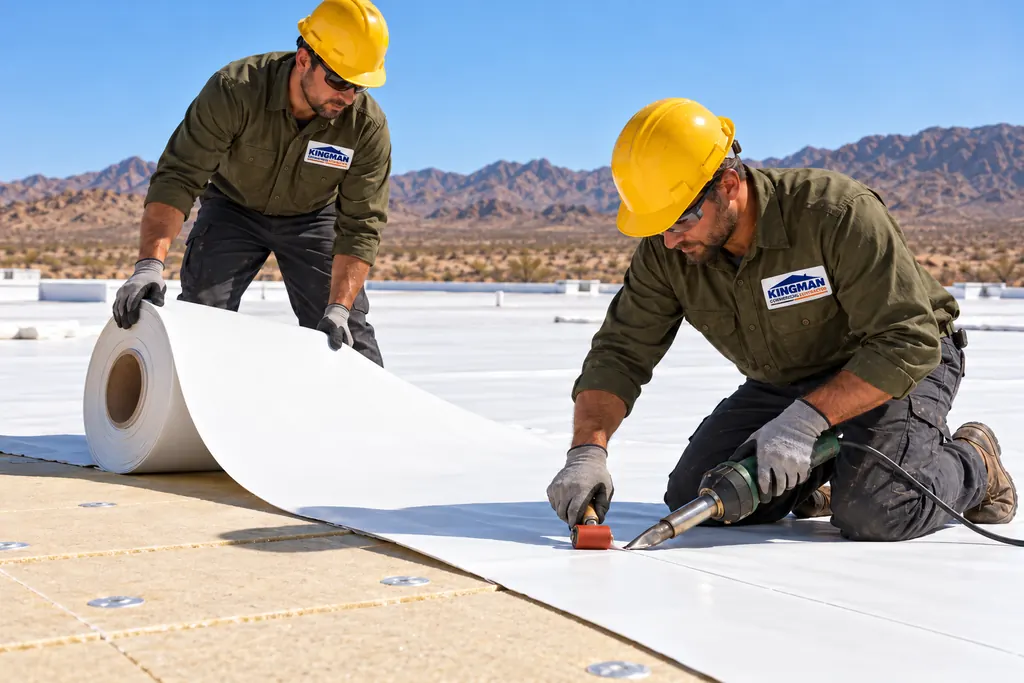
TPO fits most low-slope commercial roofs here. A few building types do better with another system.
Older TPO roofs in Kingman tend to show these six conditions before a leak reaches the ceiling.
Probing a lap with a seam tool finds welds that never fused fully. Heat cycling opens those spots first, usually at T-joints where three sheets meet near roof corners.
Mechanically fastened TPO lifts between fastener rows in strong wind. The billowing pulls at plates along the perimeter, and a torn plate hole lets water under the sheet fast.
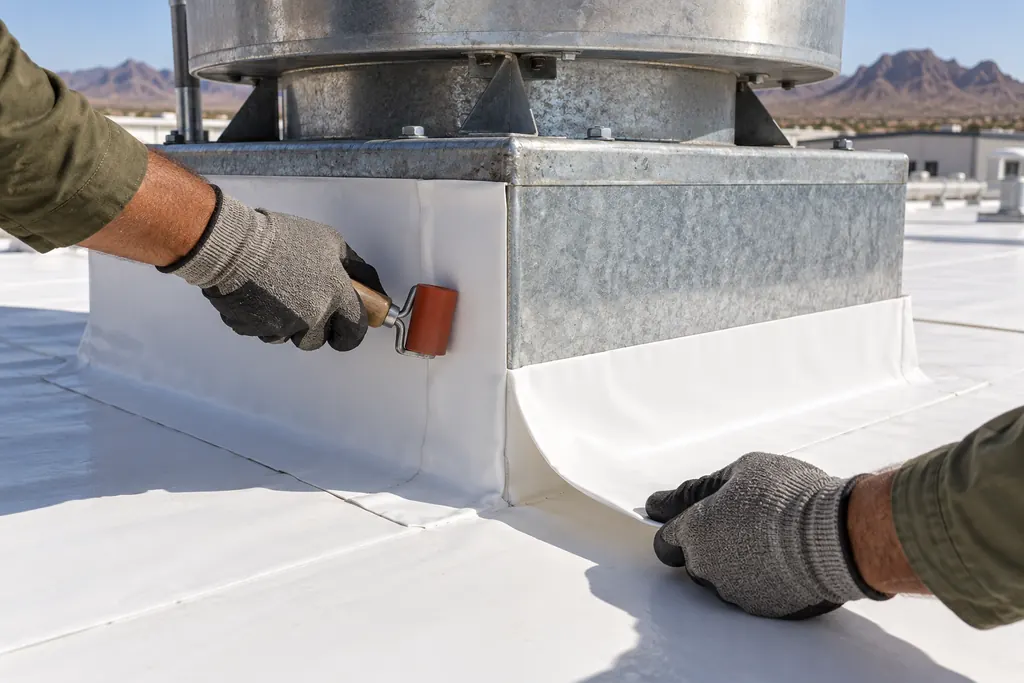
Corners of rooftop unit curbs take the most movement. Pre-formed corners crack or peel, and water runs down the curb wall into the insulation and deck below.
Service techs walk the same line to every HVAC unit. With no walkway pads, boots and dropped tools wear through the top ply and puncture the sheet near access hatches.
Low spots form where insulation crushed or drains sit high. Standing water on TPO collects dirt that dulls the white surface, and a freeze adds stress at nearby laps.
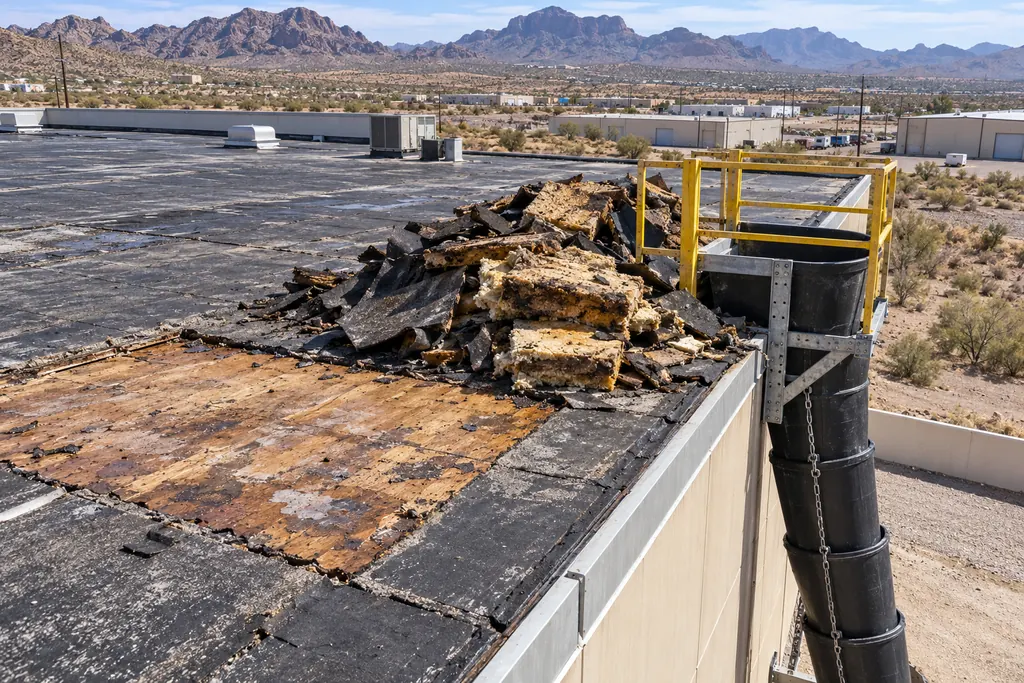
Early TPO formulations can shrink and pull at the perimeter. When the sheet cracks on a fold test, patching stops making sense and the roof needs a new layer.
Four ways we handle a TPO roof, matched to what the core cut shows.
| Option | When It Fits | What Happens |
|---|---|---|
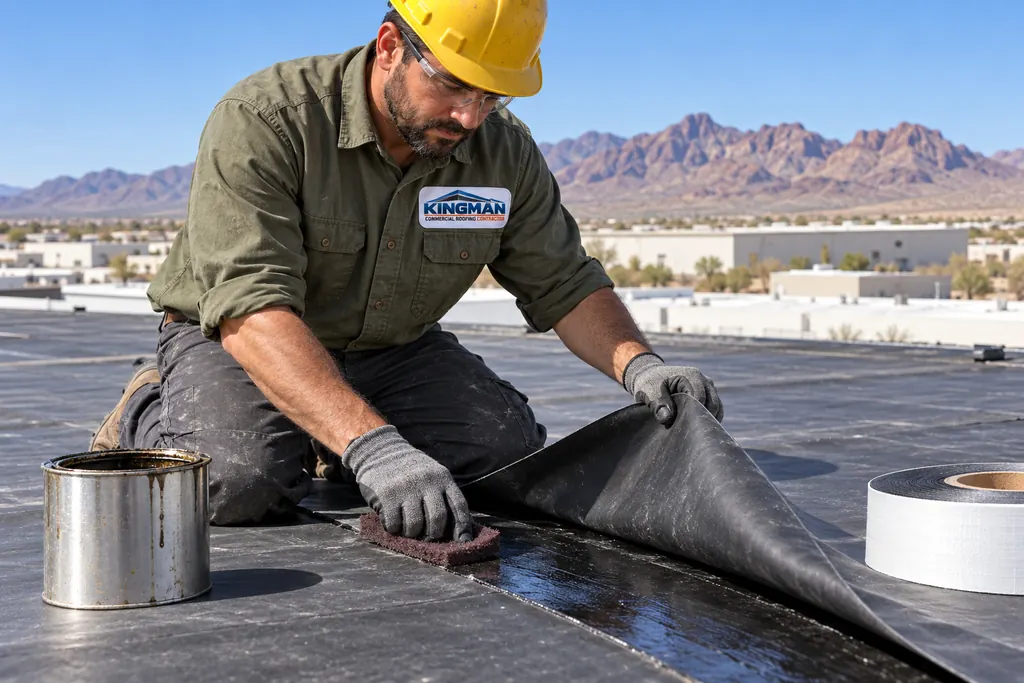
| Seam and flashing repair | Dry insulation, isolated weld or curb failures | Clean, prime, and hot-air weld new TPO cover strips, then probe every new lap |
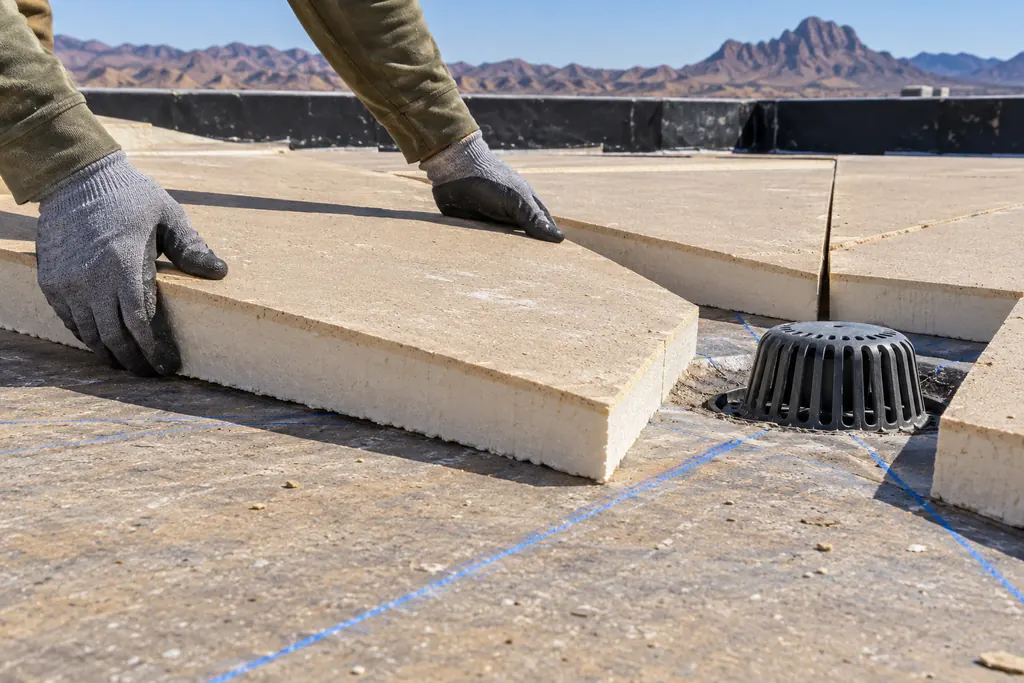
| Recover over the old roof | One existing layer, dry insulation, solid deck | Cover board over the old roof, then new white TPO, fastened or adhered |
| Tear-off and replace | Wet insulation, brittle sheet, or two layers already | Remove to the deck, add tapered insulation toward drains, install new TPO |
| New TPO on a new building | Fresh deck on a new or added structure | Insulation sized to the energy code, 60 or 80 mil TPO, welded and probed |
A new TPO system answers the problems above one detail at a time.
Dark or dirty roof absorbing summer sun over cooled space.
What the new work does
White TPO reflects much of that sun, keeping the roof surface and the rooms below cooler.
Glued or failed seams opening under heat cycling.
What the new work does
Hot-air welds fuse the sheets into one piece, and every lap is probed before the crew moves on.
Sheet billowing and tearing at fastener plates.
What the new work does
Attachment is chosen for exposure: fastened rows, fully adhered sheet, or induction-welded plates.
Punctures along the path to rooftop units.
What the new work does
Walkway pads welded along every service path keep boots and tool drops off the membrane.
Water sitting near drains and in crushed insulation.
What the new work does
Tapered insulation and crickets direct water toward drains, and crushed boards are replaced.
Mention whether the stain shows up after storms or after HVAC service. That usually points to a lap or a curb before anyone opens the roof.
What To Have Ready
A TPO job runs in the order below, with welds tested as they go.
A full walk of the TPO roof comes first. Laps get probed, curbs and drains get checked, and the ceilings below are inspected for stains that point to a wet area.
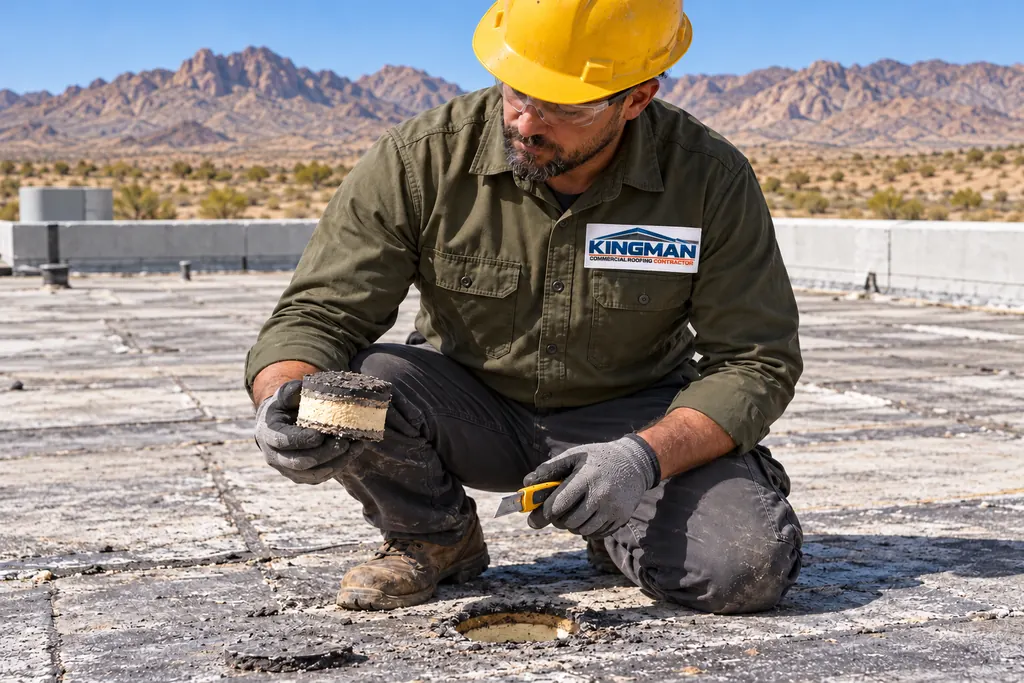
Cores near drains and stains show whether insulation is dry. Dry boards can stay under a recover; wet boards come out before new TPO goes down.
Sixty or 80 mil sheet is picked for traffic and expected life. The fastening pattern or adhesive is set by wind exposure at corners and edges.
Sheets are rolled out, overlapped, and fused with hot-air welders. Each weld is probed that afternoon, and test welds are pulled on larger jobs.
Curbs, pipes, and walls get TPO flashing. Walkway pads go down along service paths, and a final walk checks every lap and drain.
Two other systems often come up when a TPO roof is on the table.
Choose EPDM when the roof is crowded with pipes, vents, and odd shapes, or when the building has no air conditioning to protect.
EPDM rubber roofing in Kingman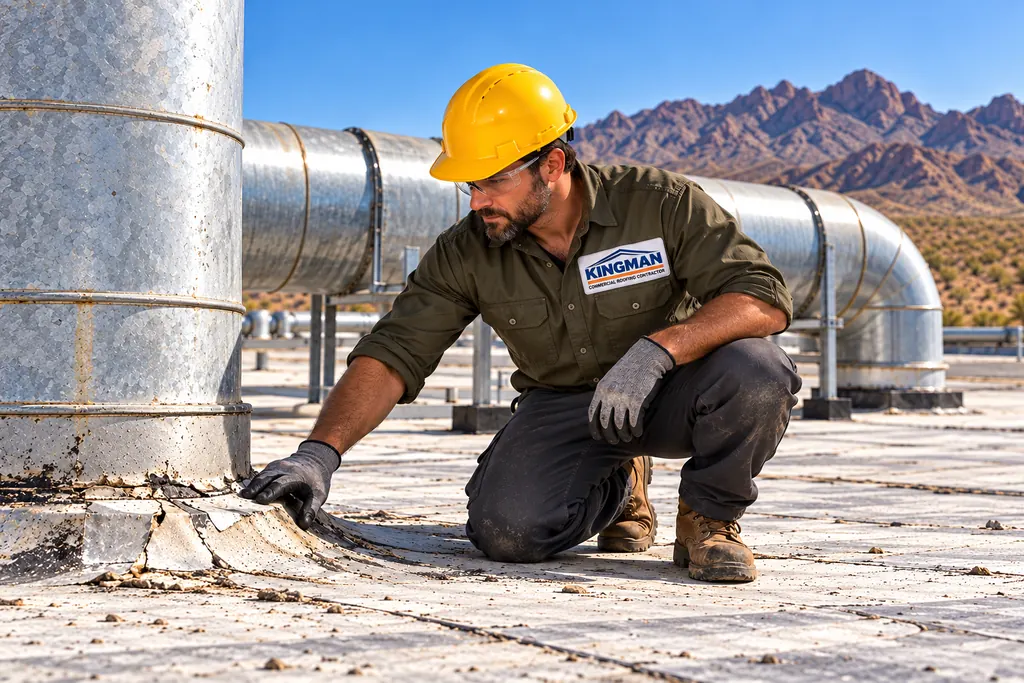
Plant roofs with process exhaust need TPO plus industrial flashing details at every fan, duct, and skylight.
industrial roofing for Kingman facilitiesStraight answers on choosing, pricing, and maintaining a TPO roof.
Yes, for most low-slope buildings with cooled space. White TPO reflects much of the summer sun, which keeps the roof surface and the rooms below cooler. Its laps are heat-welded into a fused bond that holds up to Kingman wind at the edges and to daily temperature swings at the seams.
Thicker sheet suits roofs with heavy service traffic or a longer planned hold. Sixty mil is common on retail and office roofs; 80 mil adds material above the reinforcing scrim, which helps where techs walk often or hail is a concern. We match the choice to the building's use at the inspection.
Wet insulation, tear-off layers, and penetrations move the number most. An adhered system costs more than a fastened one, and tapered insulation adds material where drainage needs correcting. Roof access, crane time, and the number of curbs to flash also count.
Yes, when there is one existing layer and the insulation is dry. A cover board goes over the old roof, then new TPO is fastened or adhered through it. If cores show wet boards, or two layers already sit on the deck, the roof comes off first.
Every weld is checked with a seam probe, a blunt tool dragged along the lap edge to find gaps. On larger roofs, short test welds are cut and pulled at the start of each work day to confirm welder settings before full seams are run.
Only for short windows. Units shut down while their curb is flashed, or when hot-air welding happens near an intake, so fumes stay out of the building. We plan those windows with your facility contact ahead of time.
Two inspections a year cover most of it, plus a look after a big windstorm. Keep drains clear, ask HVAC techs to stay on walkway pads, and have any puncture welded with a TPO patch instead of tar or caulk.
Tell us the roof size and what you are seeing inside. We start with an inspection and core cut, then recommend repair, a recover, or a new TPO roof.
Want A Call About Your Roof?
Leave a name and number and we will call you back about the building.
Or call now: (928) 436-4835