
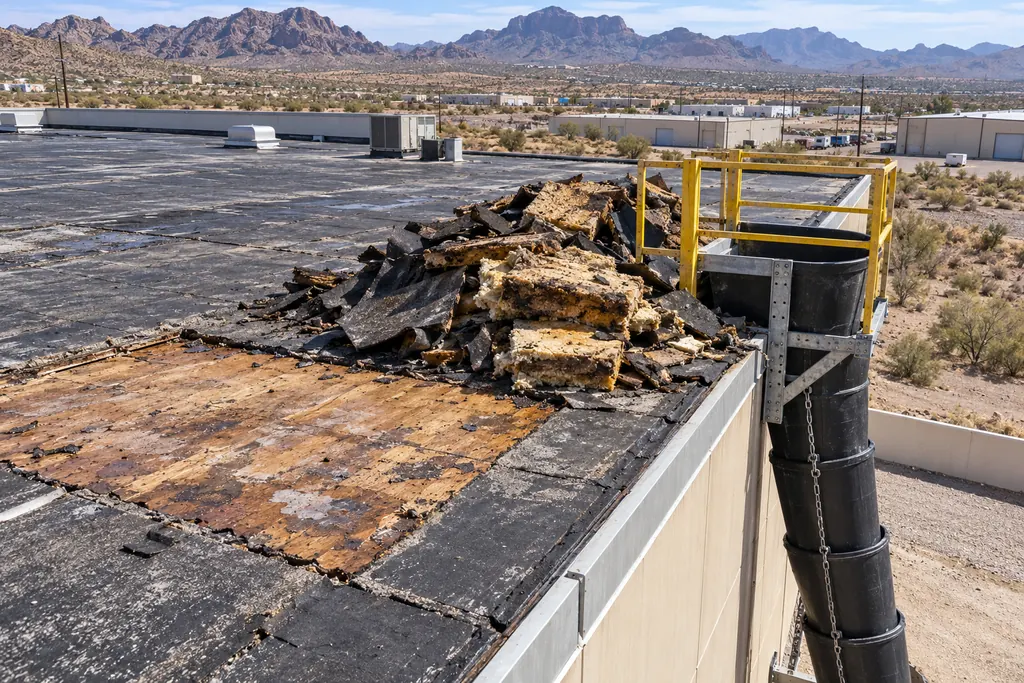
Cracked Exhaust Curb Flashing
Heat and vibration from fans work the flashing loose at curb corners. Once it splits, rain runs down the curb wall into insulation that can stay wet for months.
Industrial Roofing
As an industrial roofing contractor in Kingman, we replace and repair large plant, warehouse, and distribution roofs, with flashing built for exhaust, vibration, and heavy equipment.
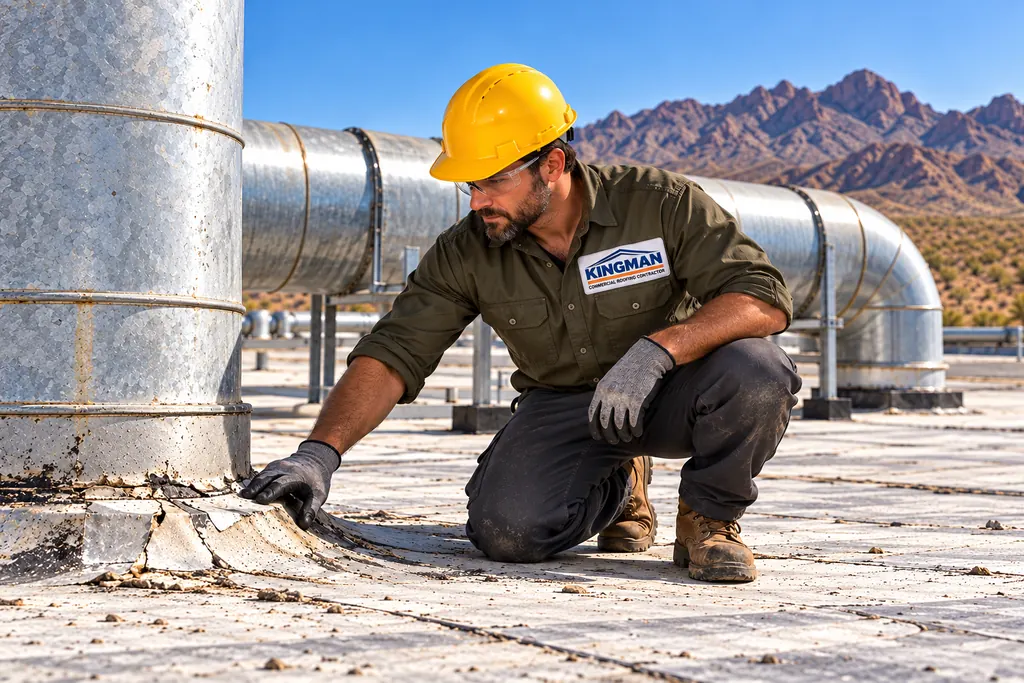
Industrial details matter when the roof carries process equipment or covers wide spans.
Big roofs fail in specific places, and most of them sit around equipment.
Heat and vibration from fans work the flashing loose at curb corners. Once it splits, rain runs down the curb wall into insulation that can stay wet for months.
Process exhaust can leave oily or chemical residue on the membrane. Some residues soften the sheet near the fan, so the flashing material has to match the exposure.
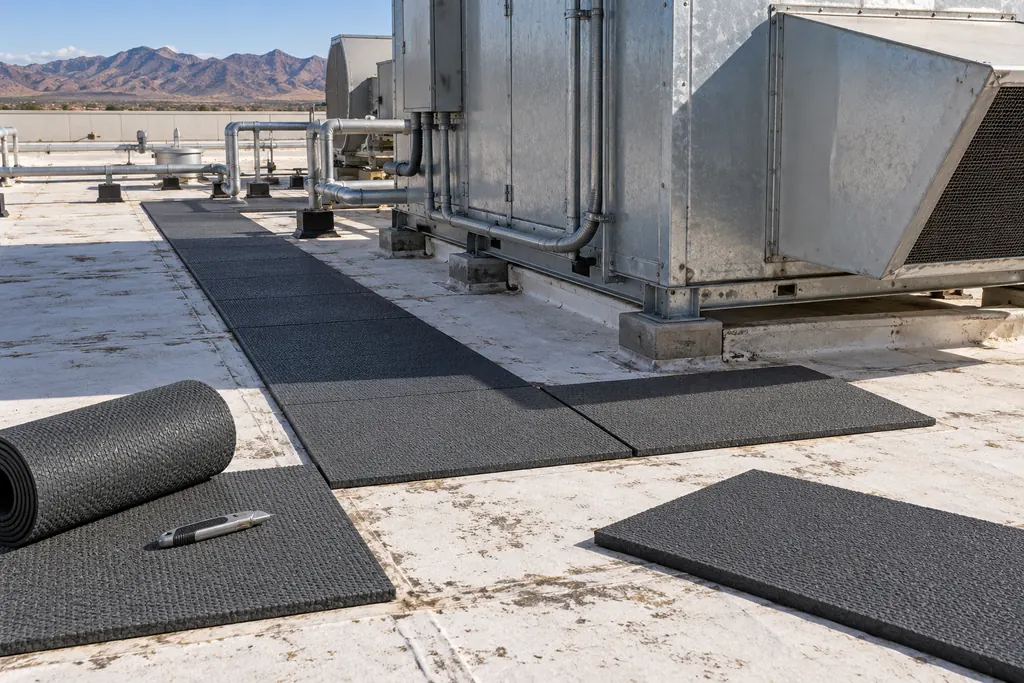
Maintenance crews cross a large plant roof daily. Their path from the hatch to each unit wears the membrane thin, and dropped tools punch holes along the way.
Skylights over warehouse floors sit on curbs that move with the deck. Old curb flashing cracks, and condensation inside the dome can look like a roof leak.
Long spans sag between joists over time, and water collects in the low bays. Rooftop units add weight that deepens those ponds after every monsoon storm.
Decades of repairs stack mastic and tape at the same spots. Each new patch traps water under the last one while the seam underneath stays open.
Four ways we handle a plant roof, chosen from a bay-by-bay moisture map.
| Option | When It Fits | What Happens |
|---|---|---|
| Curb and penetration repair | Leaks traced to fans, ducts, or skylights | New curb flashing in a membrane chosen for heat and residue |
| Section-by-section replacement | Wet areas in some bays, dry in others | Replace the wet bays first while the rest of the plant keeps running |
| Full recover | One dry layer over a solid deck | Cover board and a new membrane, with industrial details at every curb |
| Tear-off and rebuild | Saturated insulation or deck rust | Strip to the deck, repair steel, add tapered insulation and a new membrane |
The fixes below are built into the new roof, curb by curb and bay by bay.
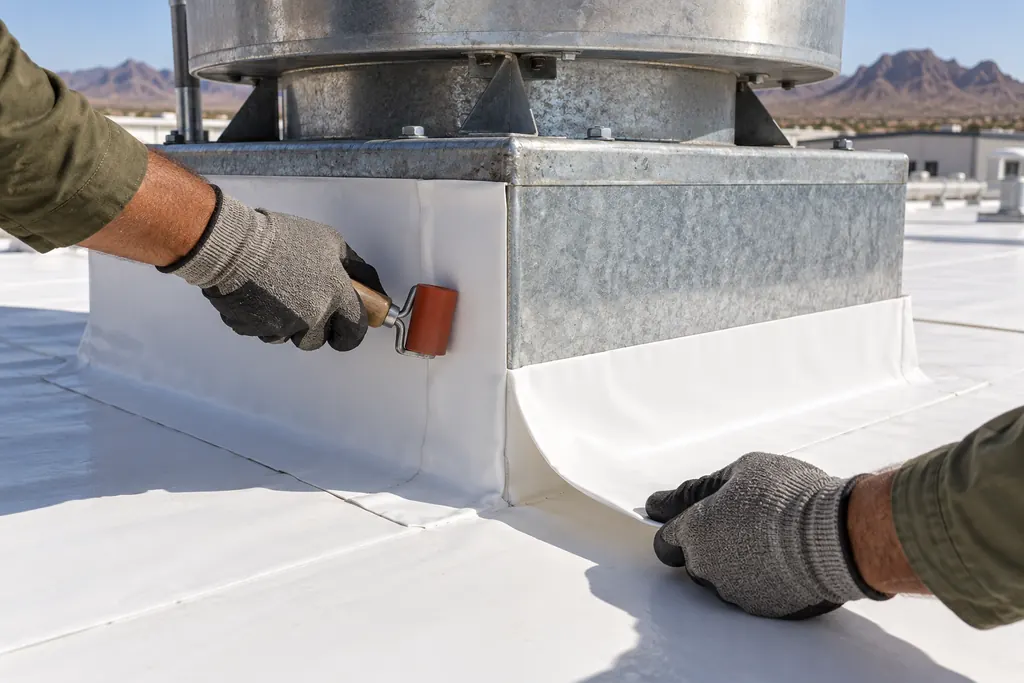
Split flashing at fans and ducts.
What the new work does
Taller curb flashing in a membrane rated for heat and the plant's exhaust, finished with metal counterflashing.
Thin spots along service routes.
What the new work does
Walkway pads from each hatch to each unit keep boots and carts on a protective path.
Water held in low spans between joists.
What the new work does
Tapered insulation and crickets move water toward drains across the long spans.
Open edges near hatches and skylights.
What the new work does
Skylight screens, hatch rails, and edge protection are planned into the job wherever crews walk.
Layers of mastic over the same seam.
What the new work does
Old patch layers come off down to clean membrane, and new laps are welded or taped in full.
Note which fan or duct sits above the wet spot and what the plant runs through it. That tells us which flashing material holds up there.
What To Have Ready
Plants keep running during the work, so the job is sequenced around production.
We walk the roof with your maintenance lead, note every fan and duct, and mark wet areas. Inside the plant, we look for stains and rust above production lines.
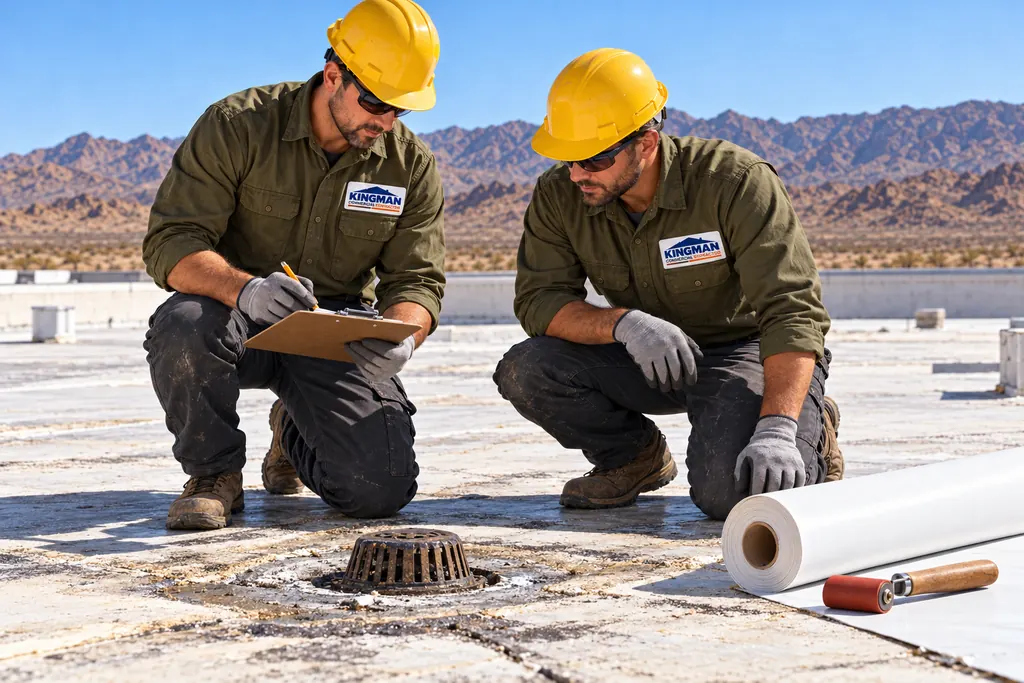
Cores and a moisture scan sort the roof into dry and wet sections. That map decides which bays get replaced first and which can be recovered.
Shutdowns of exhaust fans, crane lifts over the roof edge, and loading docks get scheduled with your facility contact. Odor-producing steps are kept away from running intakes.
Each section is torn off, insulated, and covered before the crew leaves it. The rest of the plant stays dry under its existing roof until its turn comes.
Curbs, ducts, and skylights get their flashing last. Walkway pads go down along service routes, and the final walk includes your maintenance lead.
Plant roofs often combine a membrane with one of these systems.
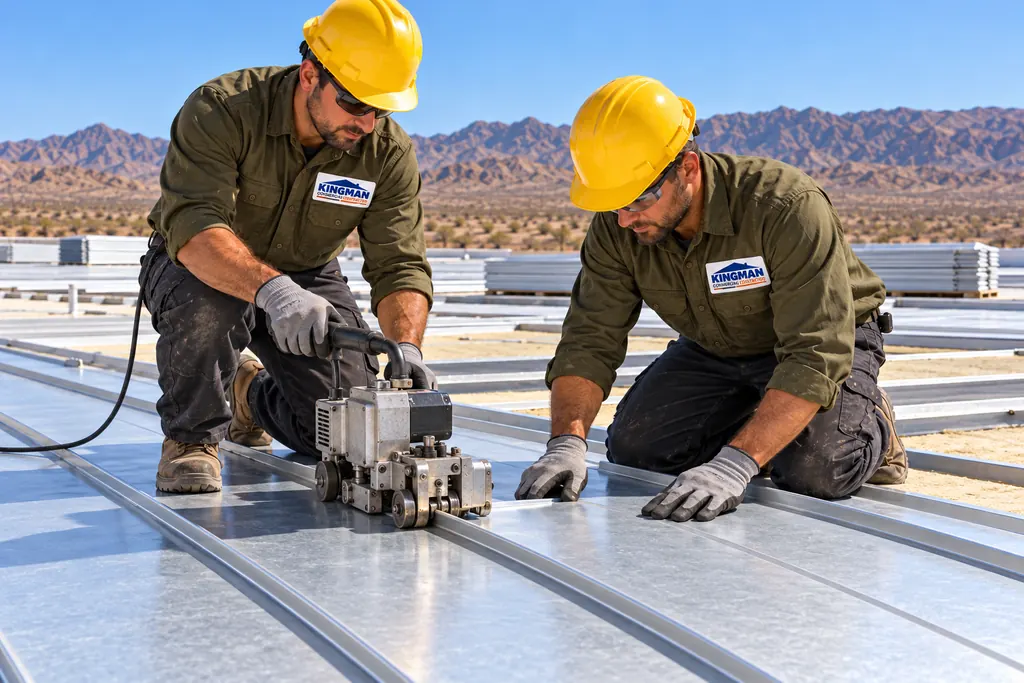
Pre-engineered steel plants often pair a membrane over the office area with standing-seam metal over the shop floor.
commercial metal roofs in Kingman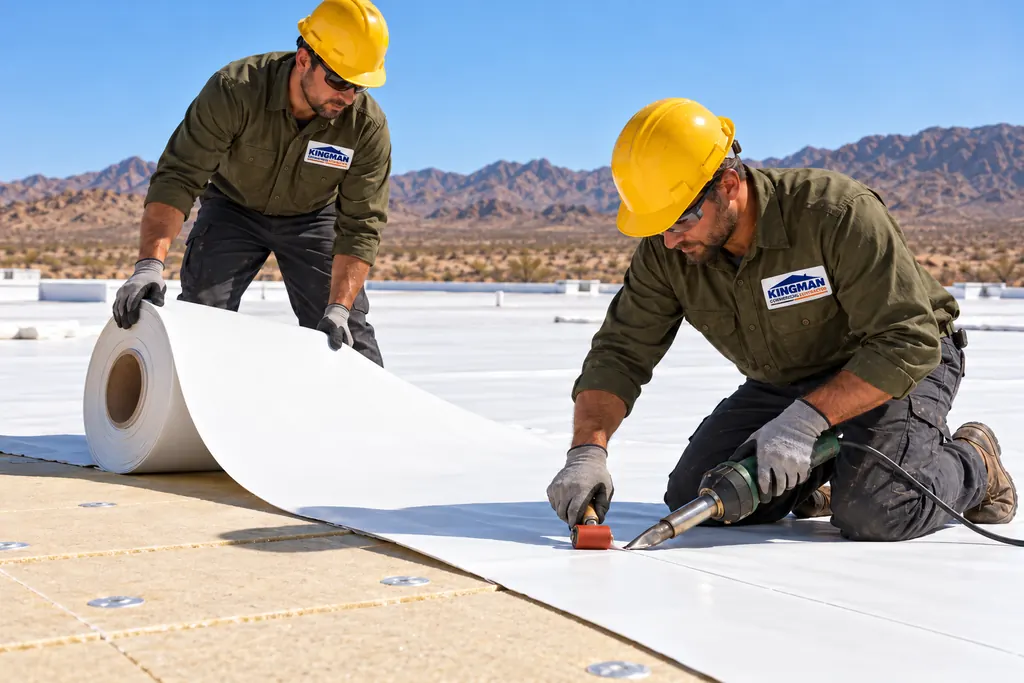
White TPO is the usual membrane for distribution roofs, welded with industrial curb and walkway details.
TPO roofing in KingmanAnswers for plant managers and facility teams weighing a roof project.
Large roofs on manufacturing plants, distribution centers, and heavy-use buildings, where size, equipment, and exhaust shape the system. Mohave County lists more than 4,000 acres and over 70 companies at the Kingman Airport and Industrial Park alone. Roofs there carry fans, ducting, and skylights that need heat- and vibration-rated flashing.
That comes down to what the exhaust carries. Some oils and chemicals soften certain membranes, so we ask what runs through each fan and check the manufacturer's chemical resistance chart. Areas near heavy exhaust sometimes get a different flashing material than the rest of the roof.
Penetration count, wet insulation, and access drive it. A roof with forty curbs costs more to flash than an open deck of the same size, and crane time or night work adds labor. Section work also adds setup days compared with one continuous run.
Yes, and large plants often are. We replace the wettest bays first and schedule the rest over later work windows. Each phase ties into the old roof with a temporary seal that keeps water out until the next section.
Rarely across the whole plant. Fans and units shut down for short windows while their curbs are flashed, and a loading dock under a crane lift closes during the pick. We set those windows with your facility contact.
Fall protection at edges, skylight screens, and safe hatch access. We plan rails or screens where crews and your maintenance staff walk, and keep material staging away from open skylights and roof edges.
Twice a year, after major windstorms, and more often near heavy exhaust. Residue builds up around fans, and equipment service adds wear along the paths. Keeping notes from each visit helps when a membrane maker reviews a warranty claim.
Tell us the building size and what sits on the roof. We inspect with your maintenance lead and plan the work around production.
Want A Call About Your Roof?
Leave a name and number and we will call you back about the building.
Or call now: (928) 436-4835