Backed-Out Screws
Panels grow in afternoon heat and shrink at night. That movement walks exposed screws loose until the washer no longer seals the hole along the purlin line.
Commercial Metal Roofing
As a commercial metal roofing contractor in Kingman, we install standing-seam roofs, restore exposed-fastener panels, and build metal retrofits over worn flat roofs.
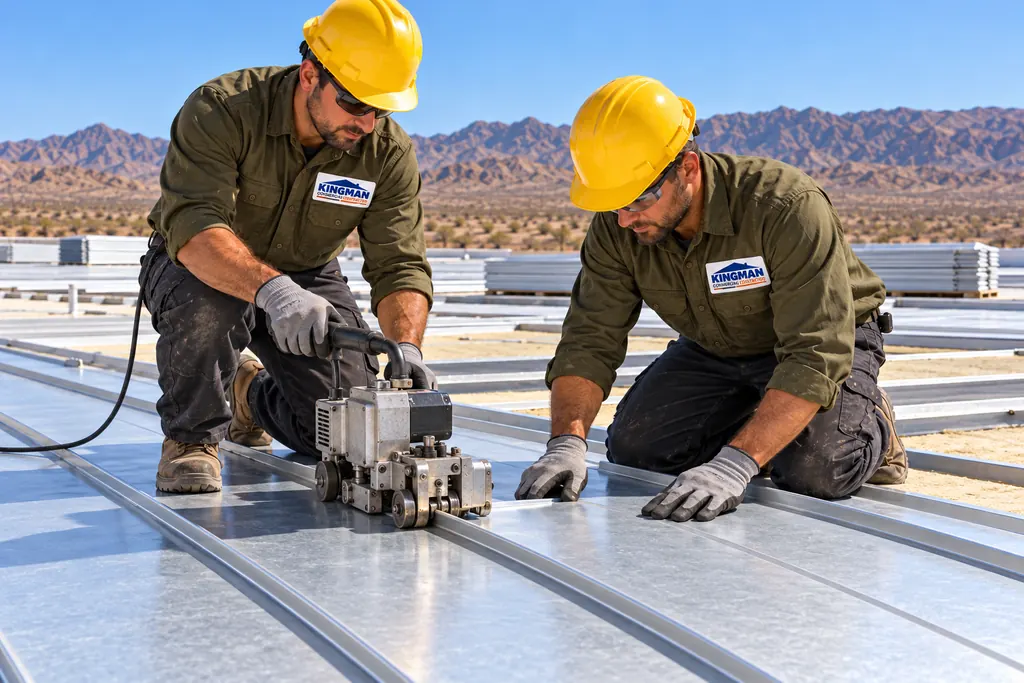
Metal fits sloped and pre-engineered buildings best, and it can turn a tired flat roof into a pitched one.
Exposed-fastener and standing-seam roofs fail differently, and both show up around Kingman.
Panels grow in afternoon heat and shrink at night. That movement walks exposed screws loose until the washer no longer seals the hole along the purlin line.
Rubber washers under each screw age in strong UV. Even a tight screw leaks once its washer splits, and a large roof can have thousands of them.
Side laps and panel ends hold moisture and dust. Surface rust starts there first, and rust-through at a lap means panel replacement instead of a patch.
Butyl or caulk between overlapping panels dries and shrinks. Wind-driven rain then gets pushed up and over the lap, usually on the side facing the storm.
Rooftop units and vents cut through the panel ribs. Curb flashing on metal takes careful detailing, and old pitch pans and sealant fail first.
Unheated metal buildings sweat on cold nights when warm, moist air meets the cold panel. Drips under a dry roof point to missing or torn insulation facing.
Four ways we handle a metal roof, from screws only to new panels.
| Option | When It Fits | What Happens |
|---|---|---|
| Fastener and washer restoration | Panels solid, screws and washers aged | Replace or reseat screws with new washers and reseal the laps |
| Panel replacement | Rust-through limited to some panels | Swap the damaged panels and re-lap them with new butyl tape |
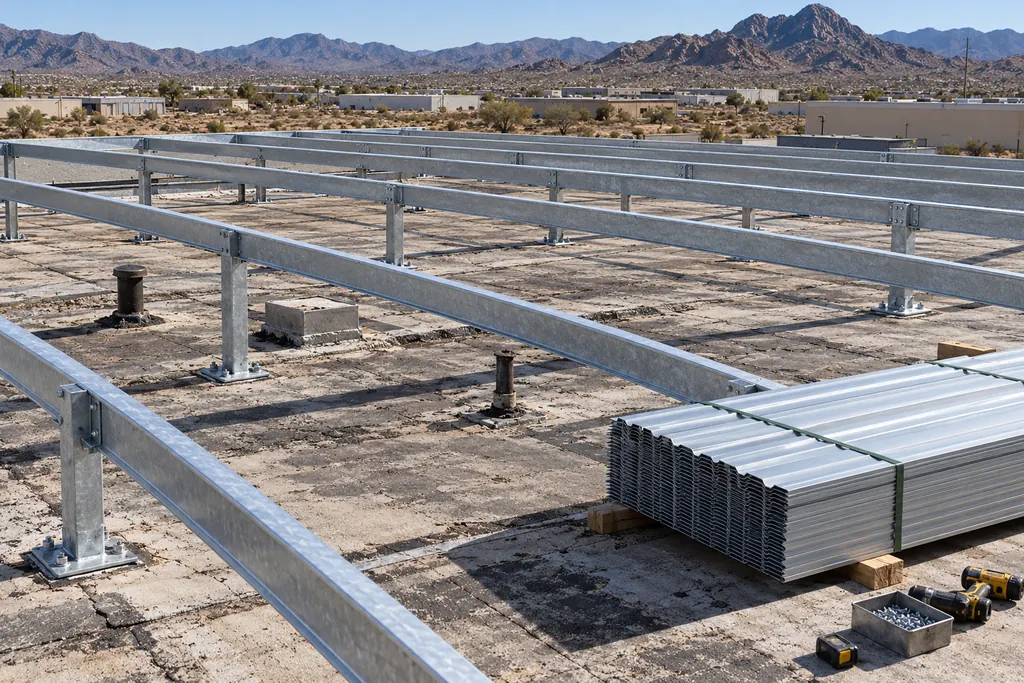
| Standing seam over a flat roof (retrofit) | Flat roof that ponds or keeps leaking | Retrofit framing sets a new slope, and standing-seam panels go on top |
| Full metal re-roof | Widespread rust-through or failed panels | Strip the old panels, check purlins, install new standing seam on clips |
New panels and clips answer the metal-roof failures above one by one.
Hundreds of exposed screws with aged washers.
What the new work does
Standing-seam panels attach with concealed clips, so the fasteners stay under the panel instead of on the weather surface.
Panels buckling or tearing at fasteners.
What the new work does
Clips let panels slide as they expand and contract with Kingman's wide daily temperature swings.
Dried sealant at side laps.
What the new work does
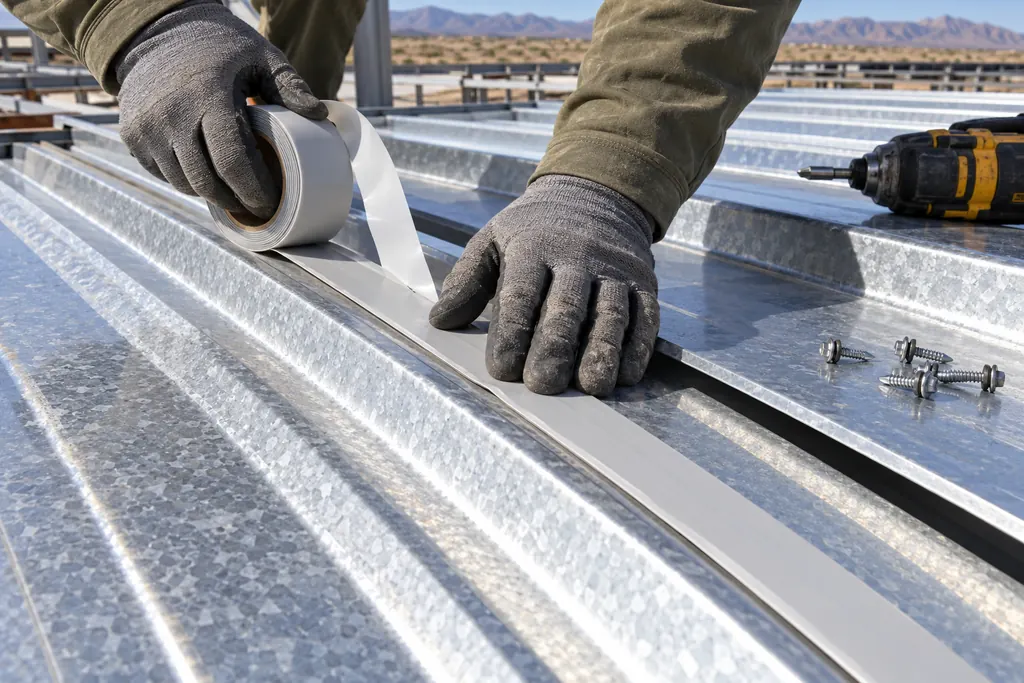
Butyl tape goes along every side lap before panels are fastened or seamed.
Water standing on an old flat roof.
What the new work does
Retrofit framing over the old roof creates a slope that sheds rain fast.
Sweating panels over unheated space.
What the new work does
New insulation with an intact facing goes under the panels to keep warm air away from cold steel.
Tell us roughly how old the roof is and whether the screws are exposed. That separates a fastener restoration from a panel or retrofit job.
What To Have Ready
Metal work moves from the structure up, and every lap gets sealed before it closes.
We walk the panels row by row, test screws, and probe rust at the laps. Inside, we check insulation facing and drips to separate condensation from real leaks.
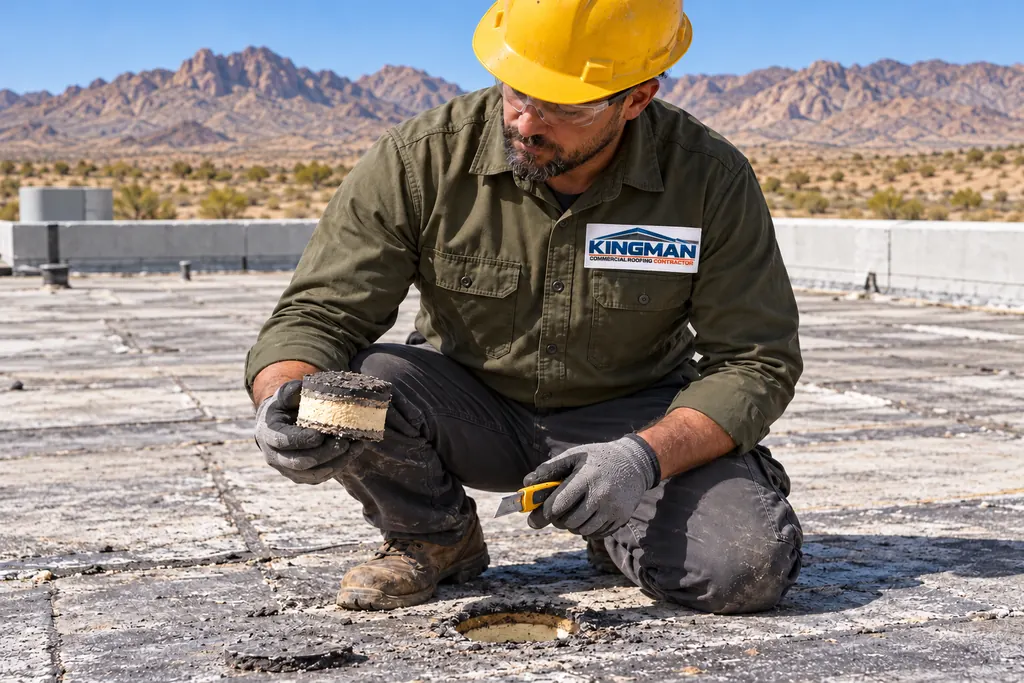
Panels are only as good as the steel under them. Rusted or bent purlins get repaired, and retrofit framing is sized for the new slope and wind exposure.
Butyl tape runs along each side lap and at panel ends before fastening. That tape keeps wind-driven rain from pushing over the lap on storm days.
Clips are fastened to the purlins and the panels snapped or seamed over them. An electric seamer closes long runs evenly from eave to ridge.
Ridge, eave, and coping trim go on last, with curb flashing at every penetration. The final walk checks each seam, clip line, and trim fastener.
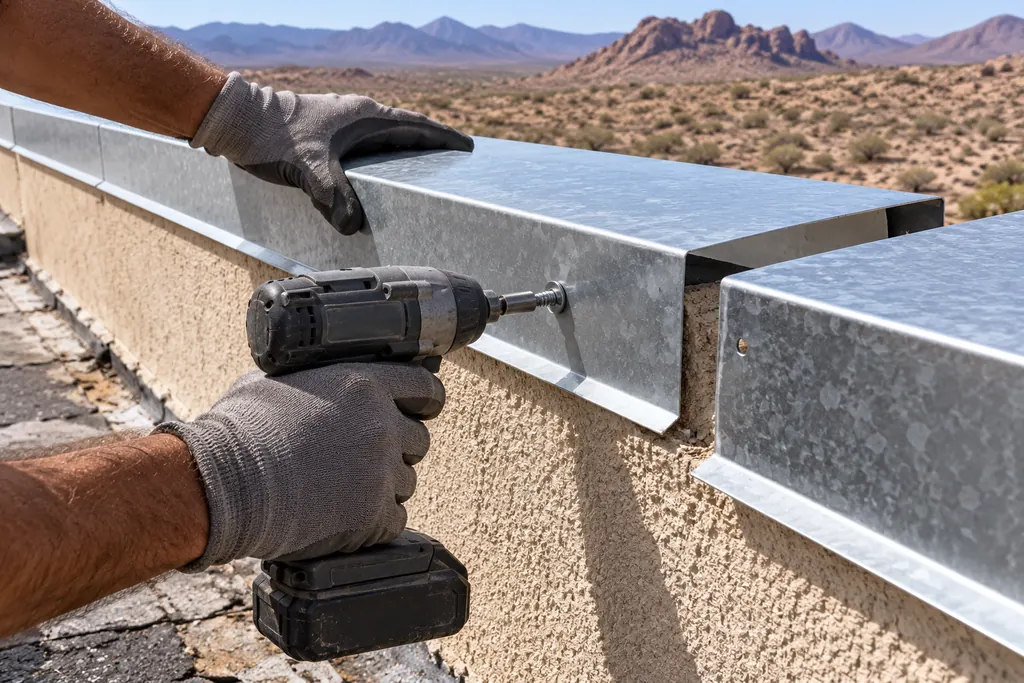
Metal buildings often pair with one of these membrane systems.
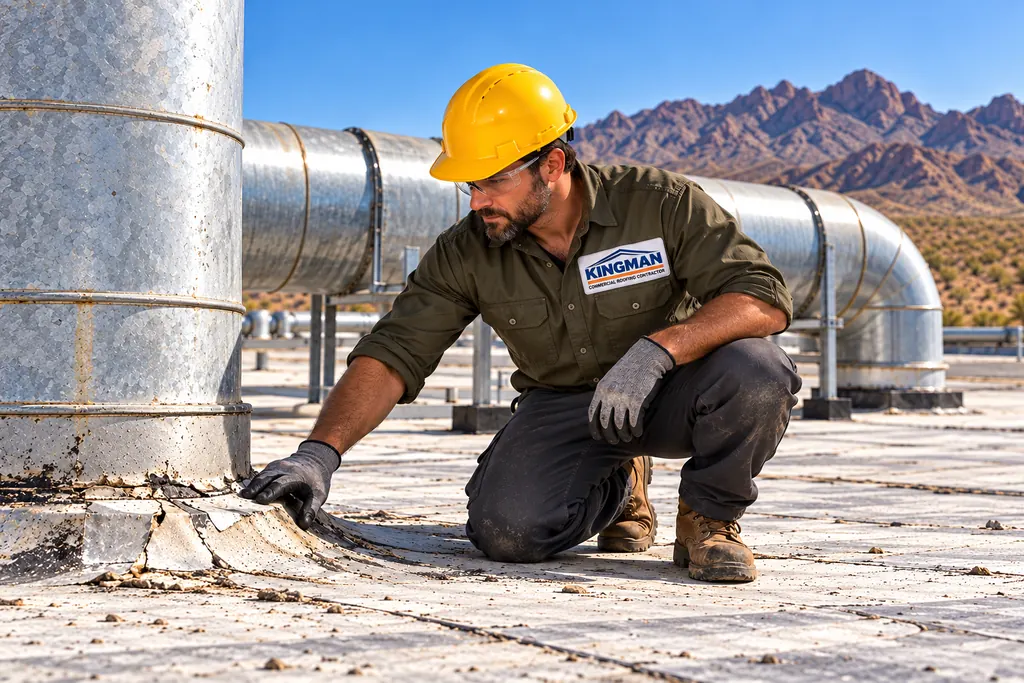
Plant buildings with exhaust stacks through a metal roof need industrial flashing details at every curb.
industrial roofing for Kingman facilities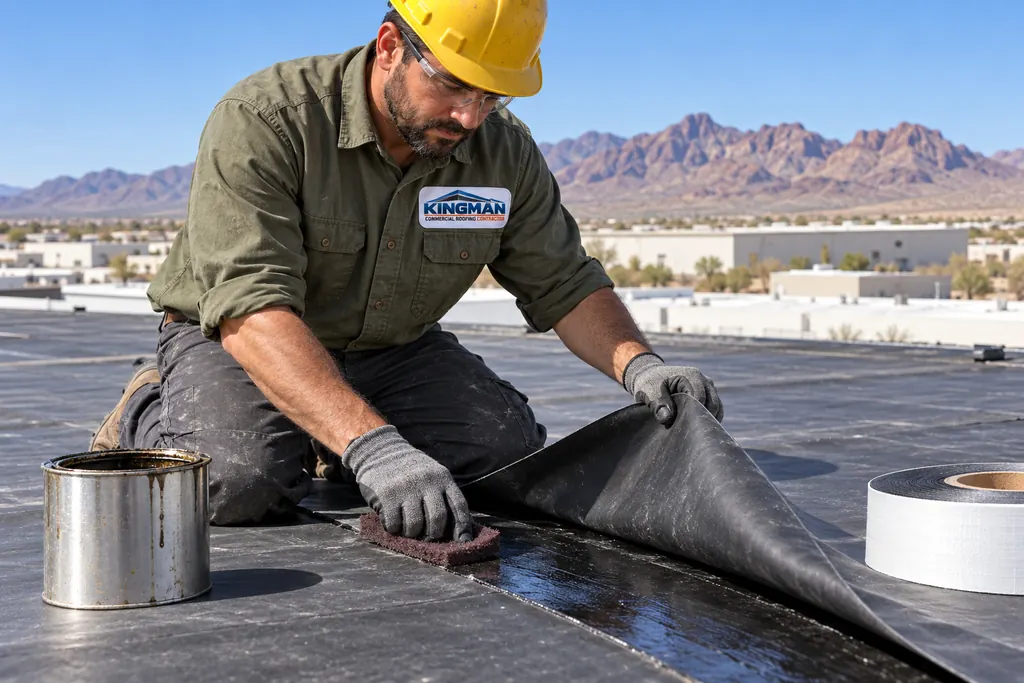
Office wings or low additions beside a metal shop often carry a flat rubber roof instead.
EPDM rubber roofing in KingmanAnswers on panel types, restoration, retrofits, and upkeep.
Often, yes. Metal stands up to sun and wind when panels, fasteners, and trim are installed to the right wind rating. Standing-seam clips handle the wide day-to-night temperature swings, which is why metal is common on shops and steel buildings in Golden Valley, Dolan Springs, and Yucca.
Standing seam costs more and needs less upkeep, because its fasteners sit under the panel. Exposed-fastener panels cost less up front but need screw and washer checks as the washers age in UV. For a building you plan to hold for decades, standing seam usually wins.
Yes, when the panels themselves are solid. Replacing or reseating screws with new washers and resealing the laps stops most leaks on an older exposed-fastener roof. Once rust has eaten through laps across the roof, panel replacement makes more sense.
When a flat roof keeps ponding or leaking and the building can carry the framing. Light steel framing goes over the old roof to create a slope, and standing-seam panels go on top. The old roof stays in place, which keeps the building dry during the work.
It can, through a retrofit or, on some metal buildings, new panels over the old ones on spacers. The structure has to carry the added weight, so purlins and frames get checked first. Code rules on roof layers and wind attachment still apply.
By keeping warm, moist air away from cold steel. Insulation with an intact vapor facing under the panels does most of the work, along with ventilation in buildings that hold equipment or people. Torn facing is the usual culprit when drips show up on cold mornings.
Check screws, washers, laps, and trim twice a year and after big wind events. Clear gutters and valleys of sand, and keep dissimilar metals like copper lines from resting on the panels. Catching a loose screw early prevents rust around the hole.
Send the building size and the panel type if you know it. We inspect row by row and tell you whether restoration, panel work, or a new roof fits.
Want A Call About Your Roof?
Leave a name and number and we will call you back about the building.
Or call now: (928) 436-4835